Another stain on the calendar,
a bitter syrup. You come
from the blank page, if you ever come.
The catheter that could deliver you
slides inside me, each time, quietly,
but not without pain—
the nurse says be patient, and the pain says
what do I mean to you.
I searched for you in semen,
saline, vials of purpling blood.
I read my own inscrutable fluids, I tried
each alphabet I knew:
I read the furrow of the doctor’s brow
as she dug inside for evidence of you.
On the bus to the clinic, a child
smiling from her seat—
some people long for a specific, imagined child
my therapist says, while others
hope for completion, a scribble in the void.
Which one are you,
and which was I?
I had other stories to write, you must know.
I had other voids to tend.
From the future, I remember you:
I explain we feel pain in order
to love: I greet you bent over
the toilet, clots revising the history.
Last summer, in the mountains, my brother
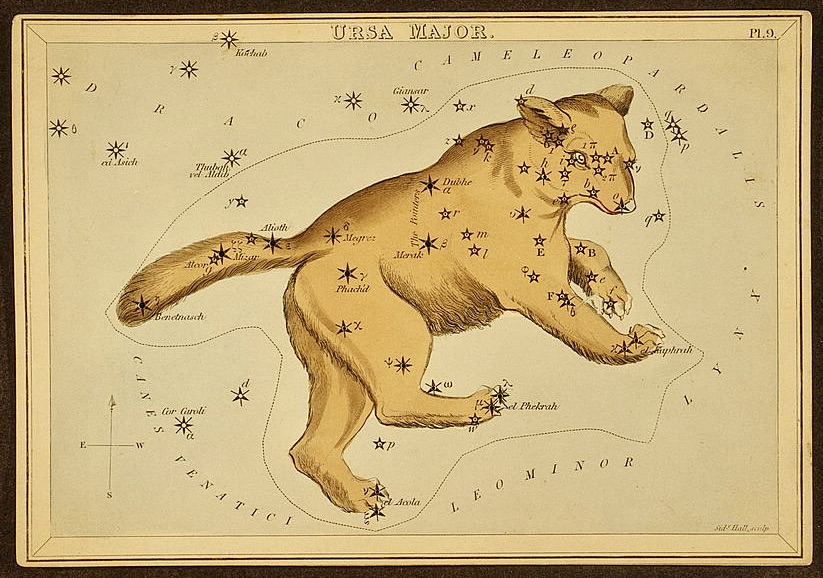
used an app to map the stars, and I searched
for Scorpio, for the bears, the other brothers.
Which one are you,
and which was I?
The app I use to track you also shifts
along a lunar axis. Also, a myth—the one
with a son of Sisyphus at the helm,
ten years’ punishment circling the sea,
a sail pointing insistently home.
—Were you there? It is possible,
according to the stars,
that you were there
before you left.
Each version of you seems less
probable than the last, and each
desired more.
I watch a stranger hold
their newly baptized infant
in the West Town cathedral,
both crying as the water
kisses them.
The teal dome yawning
above us, covered
with someone else’s angels.
At dawn, the round void
on the ovulation strip, absent
enough estrogen to smile.
There are different kinds of blood.
Or: the bloods are made of different bodies:
blood in the underwear,
blood in the test tube,
blood in the bruises that feed
the doped-up ovaries.
When he comes, I feel his blood
in his neck. I feel mine in my ears.
When you disappear, I feel your blood in my breasts,
my abdomen, everywhere that swells—
because it is my blood, returning
from its work to find you.
Are you under the capsized hull, little one?
Could you even build the boat?
If I meet you, it will be such a joy
to call your absence stubborn, as if
you willed yourself to exist
when you began to exist, if
you will exist.
For now, I journey alone:
injections, suppositories, hormones
to push you up the hill
or roll you down. The morning tide,
the evening’s coming storm.
The moon’s pull in the sky, desire
pulling me to him on schedule
or away—a path abandoned.
Then the blood, or the absence of blood.
We passed by each other
today, me walking alone
down the apartment hallway, you
this time a sudden wetness, a pinch—
A perhaps, another
perhaps—
I cannot know how many of you
live here, even the blood
is coy: you fall, you rise,
you rest in reserves, you tread water
in the dark of me
while I walk alone
down the apartment hallway,
reaching to turn the clock over.
I wanted to rest
at your shoreline, arrived—
unreasonable as two cells
meeting, dissertating, forming
something utterly ordinary.
An again-thing, little one. An ongoing.
Look at you, I could say to time,
and time, threading through
the catheter, responds no matter
where you look, you will see me.
I wanted to bend time’s arrow,
made pliable from hope—
as if hope, as time over
desire, could stay.
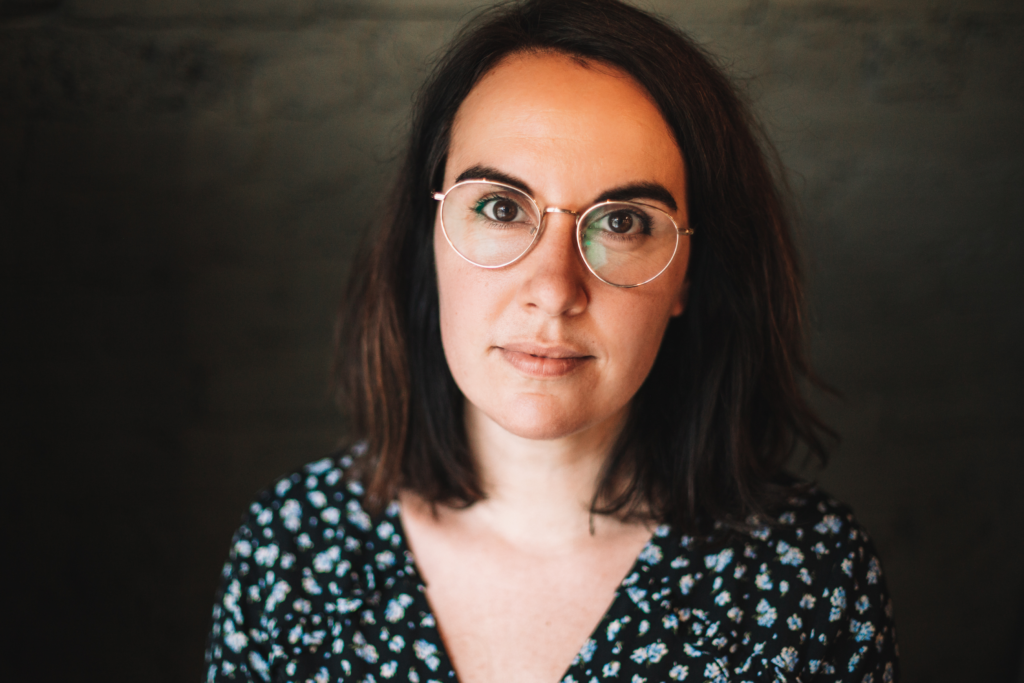
Rachel Mennies is the author, most recently, of The Wolf, forthcoming from BOA Editions in 2027. She serves as reviews and assistant poetry editor for AGNI and series editor of the Walt McDonald First-Book Prize in Poetry at Texas Tech University Press. Her poems have appeared recently, or will soon, in American Poetry Review, The Kenyon Review, Poetry, Ploughshares, and elsewhere. Mennies lives in Chicago where she works as a writer, editor, and adjunct professor. In the summer of 2025, she gave birth to a son.
Photo credit: Nastasia Mora