Essays
-
Revolutionary
Asya Graf’s autobiographical essay chronicles a journey to the past that kindles hope for the future: “I find myself summoning an ancestor […]: a phone call, a voice on the other end, decades and countries converging in that moment of contact. The mythic ghost in my family turning into an elderly woman who’s vividly alive. And who knows a thing or two about being a revolutionary.”
-
Nemo
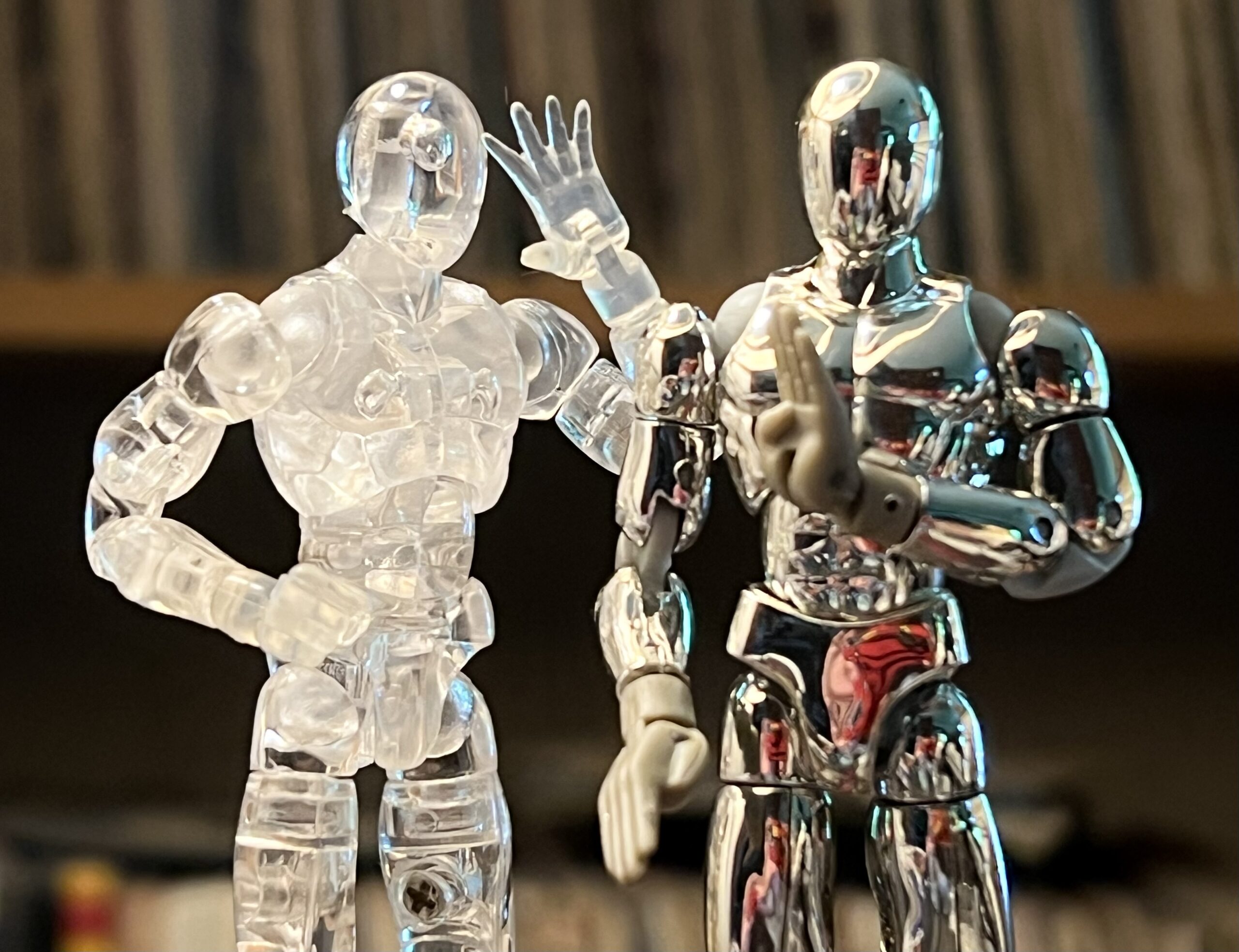
“You must understand what I cannot make you understand,” Raymond McDaniel writes about Micronauts, the 1970s action figures: “I used these toys in the same way I used reading itself: to be the other that was actually the self.” This essay’s observations—on humanity, selfhood, autonomy, and vision—are a delight to behold.
-
“Everything only connected by ‘and’ and ‘and’”: On Elizabeth Bishop and Disappointment
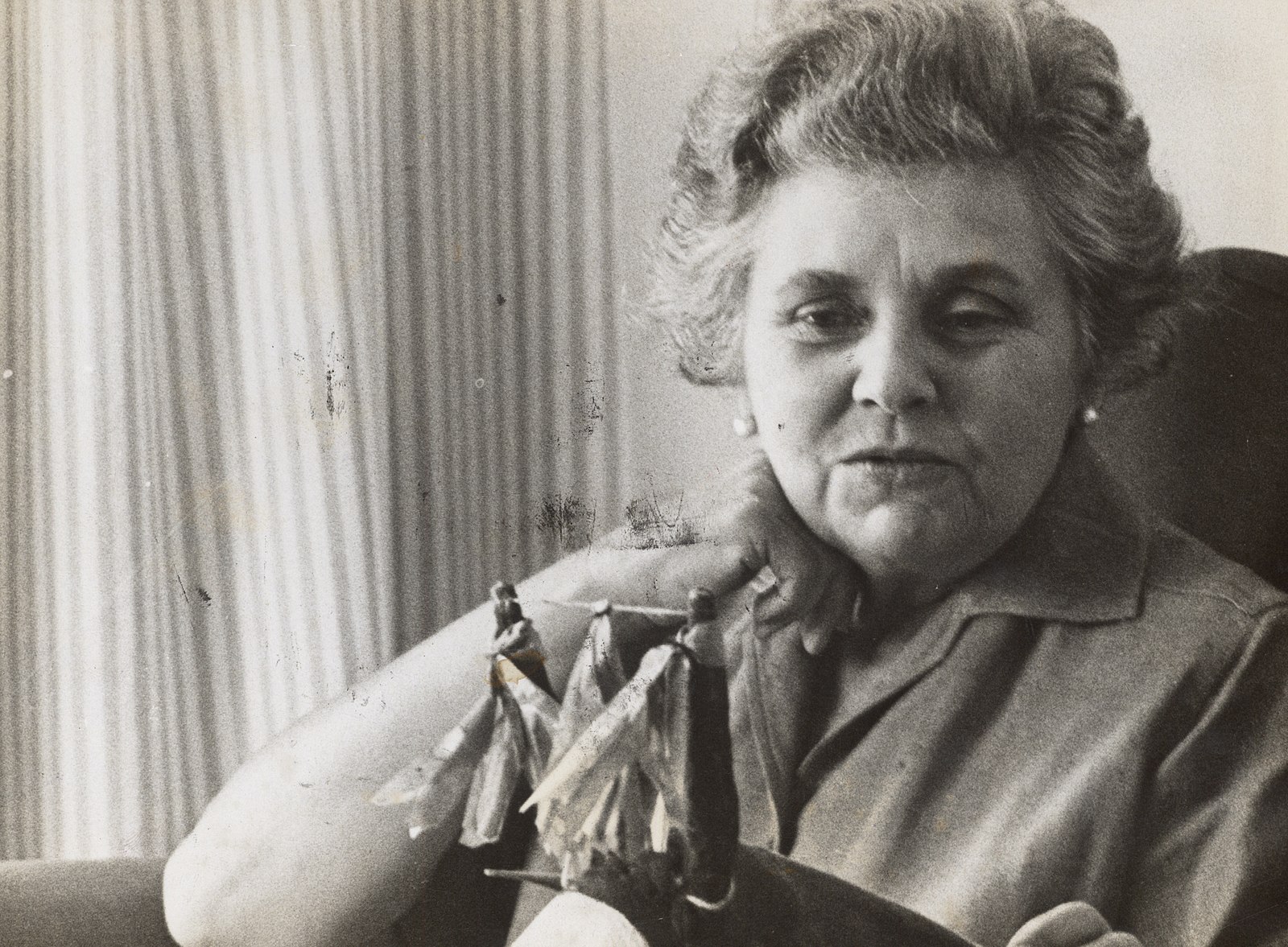
In prose that’s erudite and accessible, former Editor-in-Chief of At Length, Jonathan Farmer, explores why “[s]o many of Elizabeth Bishop’s poems end with something audibly, willfully unsatisfying.” Covering Bishop’s career from “The Map” (1946) to her late elegy for Robert Lowell, “North Haven” (1977), Farmer’s claim will send you back to Bishop’s poems with new eyes.
-

August, November, January
“All I know is every day I don’t get in the woods I feel I’ve betrayed my own birth,” writes Thorpe Moeckel in his new book, Down by the Eno, Down by the Haw . “As if I owe my birth a thing, some gratitude.”
-

Keep Fast Hold of Your Parents
I laid my victim cards before Mary Jane, one by one, like I had a Tarot pack: “See this!” and ”See this!” and “See that!” Just as I got to the part about my mother, some egregious slight of hers I thought worthy of justifiable anger, Mary Jane stopped me. Mid-sentence. “Your job,” she said, “is to leave other people alone.” An excerpt from poet Spencer Reece ‘s memoir, The Little Entrance: Devotions.
-

Forty-nine
“To lift and see my hands. To see my elbows in a headstand. There went the earth, pressed down. There I went, up from what was dragging me.” A new essay on surprise, yoga, shooting, and writing from Colette LaBouff.
-
An Arsenal of Sand
“Anger in our family was like the water: it had to go somewhere. Rise up, sink down, or burst everywhere at once.” An excerpt from Angela Palm’s Riverine: A Memoir from Anywhere but Here.
-
Poetry Ha Ha
“Theories of comedy are no more comic in themselves than theories of sexuality are sexy.” Robert Archambeau digs into ideas of comedy and the poetry of Aaron Belz.
-

Farthing Street
“I lose words, become silent as a conservation of energy, stare at things as if they hold me upright,” writes essayist Trace Ramsey in this exploration of paternal postnatal depression and recovery. “Having a new child magnifies all of this to levels I never thought could exist.”
-

The Big Father Essay
“Whenever I peeked into his room at night, there he lay, open-mouthed, those frightening white feet kicked free of sheets.” Inspired by Joe Brainard, Jeff Oaks invents a form for generating truths.
-

Ghosts of the Mississippi
“Their affection, any love—good or bad—had me. I was the fool for love.” Ben Miller remembers his induction into an exclusive, eccentric group of writers in the prologue to his forthcoming book, River Bend Chronicle: The Junkification of a Boyhood Idyll amid the Curious Glory of Urban Iowa.
-

Snapshot
“Our stories delight us intensely, yet often fail us, or come to an end.” An excerpt from The Beauty Experiment, a new memoir by Phoebe Baker Hyde.
-
The Decisive Ones
In post-Shock and Awe Baghdad, a team of reporters placed its operation in the hands of a trusted Iraqi driver. In an exceptional memoir, Thanassis Cambanis reports how it all went wrong for Sa’ad al-Azawi — and for Iraq.
-
Direction Nowhere
Forty years ago this month, Neil Young and Miles Davis shared a bill at a theater in New York City. Nate Chinen looks at two stars whose orbits passed tantalizingly close.
-
Salvage
A memoir of childhood summers spent in small-town Missouri, in a grandfather’s mysterious salvage yard — and of the surprising ways memory itself is an ongoing reclamation project. By Andrew Wingfield.