I
Marcel had often thought that if the world were to end, he’d be the last to know. Living alone like he did meant that no one was going out of their way to tell him anything.
He couldn’t have guessed how prescient that notion would turn out to be.
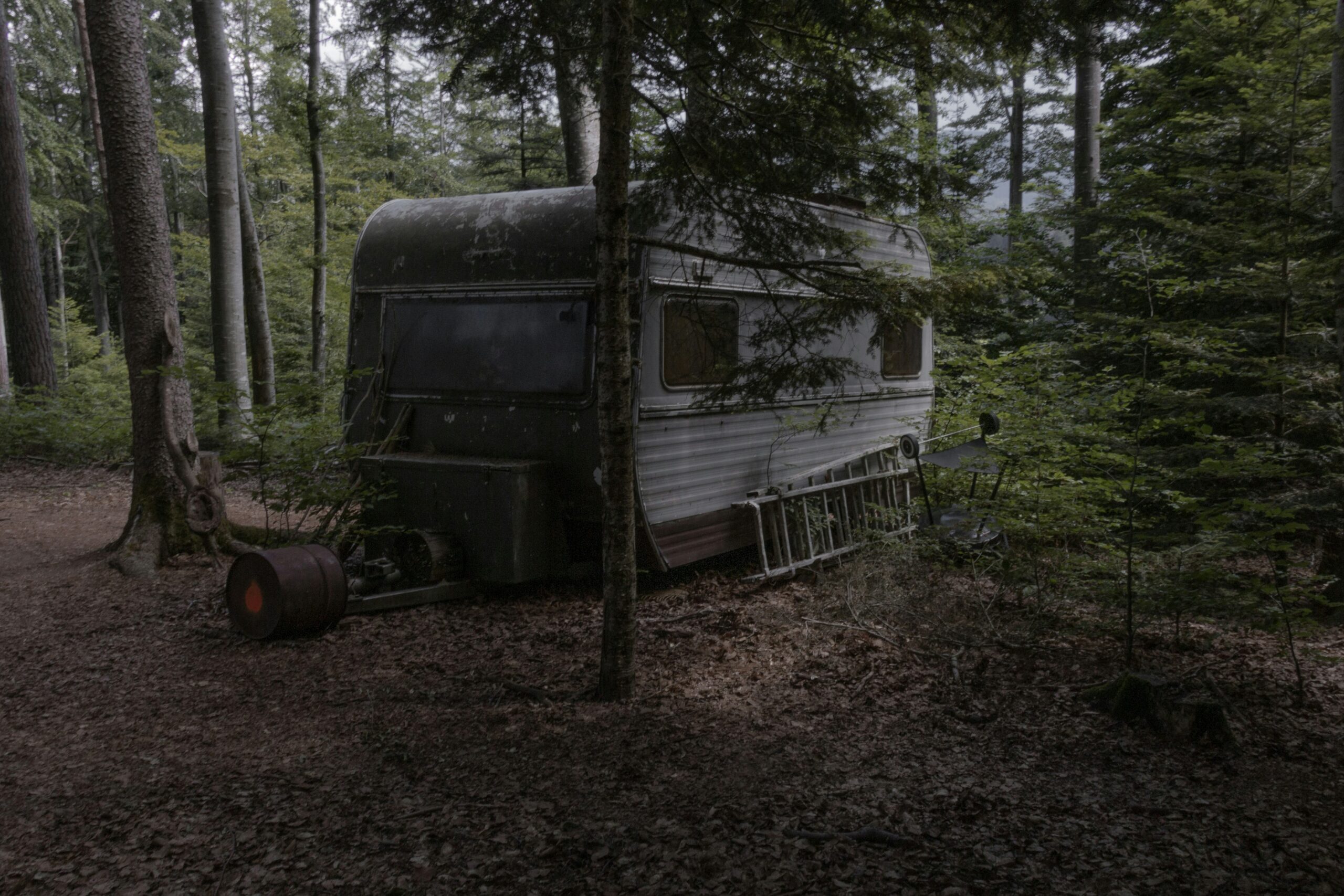
And he wasn’t truly alone. Not since he’d discovered the dog snuffling through trash under the train bridge. Her hackles lifted when she noticed him, and a low growl issued from her chest. “Yeah, well, the feeling’s mutual.” He watched her prowling the edge of the woods ten metres from his trailer. Some sort of bulldog cross, he guessed. Her face was flat and jowly, short fur mottled brown and white. He was no dog expert. There was meat on her bones but her ribs were beginning to show and her pink collar was faded and dirty. She’d been somebody’s dog, a runaway or abandoned. Marcel could relate.
Maybe she’d been drawn by the smoke from Marcel’s rusted hibachi, which he’d salvaged from a culvert and fueled with bits of scrap lumber and fallen branches. After the third time he saw her he started leaving food out: heels of sausage, bread crusts, rib bones, leftover beans. He couldn’t spare much but figured her need was as great as his. She would wait until he’d gone inside and then fall upon the plate. Without really meaning to, he moved the food closer by degrees. Certainly didn’t want to encourage her. He was much better on his own. Learned that the hard way, time and again. But he got tired of carrying the plate all the way out to the bridge.
She stopped growling at his approach, was content to lay in the sun by his screen door. Evenings Marcel would talk to her when he went out to make his fire. She stretched in the dirt and watched him with eyes that shone in the firelight while he complained about his old employers, the insurance company who denied his claim, the government which left him in the lurch. The litany well-rehearsed, yet it felt strange saying it all aloud. Then one night in early autumn when the wind smelled cold she plodded over to his lawn chair and laid her large square jaw on his thigh. He just looked at her, unsure of what was expected. He put a hand on her head. It radiated warmth. “That’s a good girl,” he said. She was trembling. “It’s okay, sweetheart. I ain’t gonna hurt you.” He scratched behind her ears and she whimpered. The tag on her collar said Mandy. He said her name and her butt gave a wiggle. He told her to sit and she sat. When he opened the door she tried to follow him in. “Oh, no you don’t. I never said I wanted no dog.”
Mandy plopped her butt down again and fixed him with a forlorn look.
“Come on, now. This was never part of the deal. I’m feedin’ you, ain’t that enough?”
She lay down with a profound sigh.
He watched her lying there for a while. “Maybe one day,” he said, and then went inside.
When Marcel lost his job at the factory which made parts for heavy machinery, he also lost his will. It had been his third job that year. His troubles began when the grocery store where he’d worked since he was sixteen closed down. There’d been a merger, the smaller store swallowed up by a giant chain which sold off the property in favour of a modern supermarket two blocks away. Such machinations of big business were an enduring mystery to him. Marcel was laid off by the new management and watched from his apartment as the place where he’d worked for eighteen years was demolished. It took only a few days for his daily routine to literally be pulverized, the plaster and concrete dust making him wheeze when the wind came from the east.
Up to that point, Marcel had led a modest life, but it was one he was comfortable with. He stocked shelves for eight hours, walked across the street to his apartment, made himself a simple meal, watched television, went to sleep. He’d had an old computer on which he’d used to play online games but it got corrupted with a virus, menacing him with all manner of pop-up threats, and he became afraid to turn it on. Now with no job to occupy him, he spent hours sitting on his sofa, watching birds eating the seeds he’d scattered on the windowsill. His cable disconnected once he stopped paying the bill.
His severance package seemed a good deal less than what it should have been, but the new regional manager intimidated Marcel with her clipped sentences and air of brusque impatience and he let the matter drop. He knew this was not correct, could hear the voice of his mother telling him, at a much younger age, “If you let them get away with this now, it’ll never stop, sweetie. Be strong.” But he knew he wasn’t strong, and it was better not to be put to the test.
He had never applied for a job, had an interview. One of his foster dads, the good one, had secured him the grocery job but he had moved to Seattle years ago and Marcel had lost touch. First he landed a job in a fast-food kitchen but couldn’t keep up with the lunch rush and was let go after two weeks. His next gig was in a busy distribution centre. He lasted almost three months there, mostly cutting down empty boxes. He was a good worker when faced with simple tasks but complexity confounded him, instructions became shuffled in his brain. Things went out of order. He wasn’t forgetful; he had no problem remembering names or birthdays. It was sequences of events which fell into disarray once Marcel tried to mentally file them, and somehow he had never devised a system to correct this.
The money didn’t last, even after he quit paying his rent. When the superintendent came knocking he cowered in the bedroom, stopped leaving the apartment entirely for fear of an encounter, except to sneak downstairs to do laundry. It was on such an excursion that his neighbour ambushed him. They had been living next door to one another for at least five years yet had never spoken. She was middle-aged, lived alone, had a dour, weathered face, and left a fug of stale cigarette smoke in her wake. Marcel had always avoided her, but he was never one to befriend his neighbours anyway. She seemed to have timed her exit to coincide with his, and she thrust a grocery bag toward him, which he regarded warily.
“Take it,” she said. “I promise I won’t bite.” The bag was heavier than he expected. “Just some stuff I had lying around. You might as well use it before it spoils.” He couldn’t meet her gaze and was suddenly afraid of what she would say next.
“I’m Patricia. Sorry we’ve never met. I noticed you haven’t been working since what, June? Such a shame they closed the store. Laying off all those people in this economy.” She made a clucking sound with her tongue. Marcel wasn’t sure what to say. He had his laundry basket under one arm. The bag of groceries was getting heavy.
“Not much of a talker, are you?” Patricia stepped closer and Marcel fought the urge to back away. “I hate to be the one to tell you this, but Gary’s bringing the cops in tomorrow to get you out of here. Least, that’s what I overheard him saying to Nina.”
Gary was the superintendent. He seemed nice but Marcel thought he also might be psychotic. Something about his eyes was not right. Marcel had no idea who Nina was, but he thanked Patricia awkwardly, abandoned the idea of doing laundry, went back inside and began to pack.
He had run out of options. His employment insurance was all used up. He had tried applying for disability benefits, at the suggestion of his most recent supervisor who surmised, “There must be something wrong with you.” But Marcel had no diagnosis and his claim was denied.
He hocked his bicycle and most of his belongings for far less than they were worth. With no place to stay, and no friend to call upon, he found himself talking to the intake counsellor at the local men’s shelter. The young man asked him only a few standard questions before granting him a bed.
Communal living didn’t agree with him. He’d been too long on his own. In the nights he slept little, and the long days adrift downtown wore on him. Too timid to panhandle, too honest for thievery, too despondent to look for work, he could feel himself fading. Skinny to begin with, he became gaunt. Then in his third month most of his money was stolen out of his locker and he quit the shelter that same day.
He had just enough coin left for a second-hand tent from the army surplus store. From the Sally Ann he procured a sleeping bag and backpack. He took his new possessions and set out up the slope of the highway to the outskirts of town, where there lay a broad swath of forest. Close enough that he could hike back when needed but far enough that no one would bother him. The woods were dense and it took some time to find a suitable clearing where he could pitch his tent: slightly inclined for drainage, well-hidden, close to the creek. He felt like an early settler. Marcel the Intrepid.
Then winter came. When he lived at the shelter, he had known people who had survived many winters in the tent cities downtown, but the cold proved too much for him. After barely a week he took down the tent and bundled it along with the bedding, tying it with twine. With the bundle under his arm he hiked through the thick of the woods toward the railway until he came upon an old service road, just a pair of ruts in the dirt, running parallel to the tracks. He followed the road until the expected bridge appeared, spanning the frozen creek.
He tucked the fat bundle snug in the juncture where the earth rose to the underside of the bridge in case he should ever need it again. It was when he turned to leave that he saw the trailer abandoned off the side of the old road.
It was a tow-behind camper, its front end propped on cinderblocks. Probably thirty years old or more, judging by the look of it. Both tires flat and the siding spackled with rust, but somehow the windows were intact. He looked at it a long time before trudging back to the shelter downtown.
One day when Marcel came back from town, laden with deformed fruit and other rejected groceries, he found the door to his trailer open a crack. Inside, Mandy lay curled like a sow bug on his bed. She made no move when he entered but her eyes followed him. He set his bags down, put his hands on his hips. She looked guilty.
“So,” he said. “I guess this is how it’s gonna be. But there’s one condition. You can’t run off on me, okay? If you’re in, you’re in for good. Got that?”
She blew her breath out of her nose and closed her eyes.
Marcel felt legitimized by her presence. He used to go for days without eating, was accustomed to it, but now if evening came and there was still no supper the dog would fix him with those sad eyes until he got off his butt. His days began to acquire much-needed structure. He collected empties in town once a week, carted salvage to the scrapyard once a month, picked up bagged meals from the shelter every couple of days. He had an acquaintance at the grocery store, a friend of his sister from out east, who sometimes gave him food past its prime. Bags of oranges, steaks, cartons of milk and eggs. Potatoes and onions with funny spots on them. In the trailer he had a little camp stove and a propane heater. Marcel was no chef but he could fry eggs and boil potatoes and grill chicken well enough that neither he nor Mandy ever got sick from what they ate.
Years passed as he adjusted to life in the woods, going into town less and less often. He started a small vegetable garden in the clearing at the side of the trailer that got the afternoon sun. Tomatoes, peppers, zucchini. Winters were lonesome and dreary but less so now that Mandy was there. She liked it when he read to her, old dog-eared books he scooped from the shelter now and then. Dickens, Mark Twain, all the classics that no one else wanted to read. Sometimes he would snag a romance novel but it didn’t feel right to read about lovemaking with only a dog for company. Mandy preferred adventure stories anyway.
A few weeks after moving in he had the trailer in reasonable shape. He’d gone to scope it out two or three times once the cold weather broke and took it over the second week of April. It had been full of broken glass, cigarette butts, a stiffened issue of Club from decades ago. He peeled through the pages of the magazine—furtively, as though Lucille might burst in and declare him a little pervert—before burying the trash off-site and setting about making the place livable. It didn’t need much. He bought a tube of silicone caulking to seal the spots where rainwater seeped in, salvaged a length of garden hose to drain the sink outside. There was no toilet; he squatted in the bush for the first few weeks but this was no way for a man to live. On bulk trash pickup day he went into town, wheeling a stray shopping cart around the suburbs gathering useful items: a steel teakettle, an old propane tank, a toilet. He came across a dusty shelving unit and he took all the shelves, avoiding the frowning look from the homeowner who was sweeping out his garage. I’m doin’ you a favour, buddy, he wanted to say.
At the building supply store he bought a small box of nails and a pack of wood screws. He asked the man at the counter if someone wouldn’t mind cutting a hole in one of the shelves for him. The man looked at him with distrust and said, “Fine, give me the wood.”
Marcel dug a deep, narrow hole in the middle of a thick stand of pine near the camper. He had only a little plastic trowel and it took hours. With the flat of his prybar he nailed together the wooden shelves into an open-ended box, with the hole on top. He attached the toilet seat over the hole with the wood screws and set his creation on top of the pit. The joints were hardly flush but it came out better than he’d expected. He was no carpenter and it was not very sturdy, but he was not very heavy. Now he just needed to save his coins for some basic tackle so he could fish in the creek. He wasn’t one for handouts. He could make it on his own.
By his third year Marcel hardly went into town at all. Which was much to his preference; some of the downtown businesses had started complaining about him coming around and rifling through their trash bins. He’d been warned twice already.
Screw ‘em, he thought. We can get by well enough on our own. Mandy and me.
His little vegetable crop had done well. He was catching fish now too. Trout, he thought. He was no fish expert. But it was getting colder and fishing was becoming a challenge. He would have to get a pellet gun somehow, shoot him some rabbits and squirrels. Maybe next year.
Winter came early. Two days of flurries and then a major storm. It snowed nonstop all day and night. The next morning Marcel could hardly open his door. Mandy was hesitant about going out but he gave her a push and she went bounding through the snowfall, disappearing and bouncing up again while he watched from the trailer.
Gas was running low, as was their food. Maybe a week’s worth. He hadn’t been spending any money but hadn’t made any either. Thought he had enough to fill their tank but not much besides. Once the snow melted he would need to make an overdue trip to the scrapyard.
But the week ran itself out and the cold hadn’t budged. If anything it deepened; when he went out to relieve himself the air bit into him. It was getting harder and harder to dig out a path to his latrine. With no way to forecast the weather, Marcel could only guess. Another heavy snowfall would make travel impossible. He bundled himself up in the collegiate sweatshirt and heavy wool peacoat he’d gotten for free from Goodwill. No way he was rolling the cart through this, so he strapped on his pack and hefted the near-empty tank.
Mandy frowned at him while he got ready for his expedition. “Don’t gimme that look.” But frowning was her default expression. “I’d rather stay here and sleep, believe me.” He dug out the rabbit toy he had bought for a quarter at a garage sale. It was her favourite toy and he tried to reserve it for such occasions as this. But she just looked inconsolably at the flop-eared rabbit as though it were the source of all their hardships. “Damn,” he told her. “You don’t make this easy.”
He left the lantern burning for her and set off into the drifting snow.
His sweatshirt was exactly that within a few minutes of leaving. He hadn’t been walking enough lately and now he tired easily, fighting through the knee-deep snow. Even empty, the propane tank made his forearms burn. He cut across the field and made it to where the road should have been, but it didn’t show at all beneath the undisturbed mantle. Marcel studied the landscape. This regional highway, always bustling with cars and trucks, was usually first to be ploughed. Now there was not a single car in sight. The sun made a blinding glare off the surrounding whiteness. He could barely keep his eyes open, having lost the woods for shade. He pulled his hood tighter and trudged on toward town.
There was a wide snowdrift across the road, almost waist-high, and when Marcel went to ford it his knee struck something and he cried out. That was how he discovered the roadblock, a concrete barrier spanning all three lanes. He dug part of it out with his old mittens, puzzled over it a moment, and carried on.
The wind died as he moved into town. Silence closed around him. In the new subdivisions, driveways lay blanketed. Cars sat crowned by almost thirty centimetres. He came to the gas station where he normally filled the tank. No tracks of any kind. The door was locked and no one was inside. He would have tried filling the tank himself but there was a padlock on the valve.
He reached the intersection and looked both ways. Dead whiteness. The town seemingly frozen in time as well as temperature. He headed west toward the shelter, passing empty storefronts with dark interiors. A bank. A Presbyterian church where he had gone once out of curiosity or desperation, only to be chased out by the wide-eyed looks of the church-goers. The heavy door was locked anyway.
The shelter was open. The front desk sat unmanned and all the lights were out. Marcel’s footsteps echoed dull in the hallway. He was too afraid to call out. The building was cold and his breath came out in little grey puffs. Though he had lived here, the shelter felt like somewhere he was not supposed to be.
He came to the dormitory and stood in the doorway looking inside, but the blinds were all drawn and he couldn’t make anything out. As his eyes adapted Marcel thought he could see dark shapes in the bunks but he heard no snores and anyway they all should have been empty at this time of the afternoon. Marcel stepped inside. His mouth was dry. In the cold air there was a putrid undercurrent that was worse than the usual funk of unwashed men and sour breath. He came to the first row and looked down at a bunk. The man lay as rigid and solemn as a mummy, his hands folded on his chest. Marcel stared. The next two bunks were likewise occupied. The mouths and noses of these permanent residents were covered by cloth bandanas. As his pupils widened in the gloom more and more prone figured became visible on their bunks. Marcel slowly backed away. As if the moment he turned around, the bodies would start to rise.
In the hallway again he was struck by a sudden bout of dizziness. He told himself to breathe. Then he told himself to think.
He went past the dormitory to the supply room and found it was locked. After a moment’s hesitation he got the old prybar out from his backpack and jammed at the doorframe until the flat blade was wedged. He gave the bar three successively harder pushes until he heard the door starting to crack.
If Marcel prided himself on one thing, it was not being a thief. In his daily life he took only things that were discarded or unwanted and while he was raiding the shelter’s store of dry and canned goods he kept throwing nervous glances over his shoulder, as if the day manager, Dave, might appear and say “Aha! Look who’s got sticky fingers.” He wouldn’t be mad, just mildly disappointed. Like a babysitter who was unfazed by the most outrageous tantrum.
But Dave never appeared while Marcel filled his pack with as much as he could carry: dried noodles, canned fish, beans, soup, jars of sauce. He put the pack on and his skinny back twisted beneath the unbalanced load. He felt as though he had just plundered some ancient tomb and brought a curse onto himself.
The day was clouding over. Marcel didn’t know what he should do. He had a thought to contact his sister out east but he didn’t know her phone number. She had never been keen to hear from him anyway. It occurred to him to return to the shelter and dial 911 from their phone, but the thought of going back there made his breath run short. He decided to go back to the gas station and see if he could get the lock off the propane valve with his prybar. He walked through the snow with the heavy pack swinging on his back. There were no dirty looks now. No children pointing and staring as they drove by with their parents.
He was paying more attention to his surroundings and began noticing signs on the doors of the health food store, the Greek restaurant, the Irish pub. Everywhere he saw signs affixed to front doors: a plain red X on a white sheet of paper. He didn’t investigate any of the stores. He wanted to see about the propane, get back to Mandy in the trailer, cook a big feast, and then figure out what to do next. Marcel was not a man who liked to rush any decision.
II
There was no way to pry off the lock without damaging the valve lever. He decided to leave the tank behind the gas bar, make another trip tomorrow or the next day. Find a hacksaw and go to work on that padlock. It was time to get home.
The wind had picked up. Marcel’s socks were wet, his toes tingling cold. The blinding morning had subsided into a steely grey afternoon. Marcel thought it would probably snow again. He was thinking of those people back at the shelter. He could not have claimed to have been friends with any of them but a few had been friendly toward him. He was not exactly sad. He didn’t know what he was. A profound sense of déjà vu had settled over him. This all felt familiar in a far-off way. Marcel might have been a little slow, but he could replay scenes from decades ago as though they were projected on a screen in his mind. He’d often taken refuge in these mental movies during lonesome nights or tedious shifts at the grocery store, cycling through a limited selection of old favourites. Without exception, they featured his mother. Taking him to the water park, the bird sanctuary, the toboggan hill. But there were also plenty of memories he tried to avoid, mostly failures and humiliations at school. When he was feeling sorry for himself, he sometimes replayed those ancient grievances instead. They brought cold comfort, a dull, familiar pain he could reckon with.
The scene he replayed now was of yet another variety.
He was eleven years old. His big sister had already run off and it was just him and his mother in the old narrow townhouse. He had come home from school and his mother wasn’t there. He waited for her all evening. Dinnertime passed; it got dark and she still hadn’t returned so he fed himself soda crackers with process cheese and went to bed.
When he woke the next morning he was already late for school. He put on his pyjamas and padded slowly down the stairs to a deserted kitchen. He sat at the table and listened to the ticking of the furnace ducts, a robin singing outside the window. A large lump had formed somewhere in his upper chest and he felt like he might cry. After a while he got up and went to the living room and sat on the threadbare sofa, staring out the front window and waiting for something to happen. The telephone rang in the kitchen. It beeped and a male voice spoke into the machine. Noon came and Marcel made himself Cheese Whiz on bread. He had the same for dinner. Afterwards he turned on the TV. There was static on all but three channels ever since their cable was cut off. He watched a paid commercial for kitchen knives. It was after midnight. He didn’t realize he’d been sleeping. He had a sudden, horrible certainty that someone was in the house. Probably it was just the remnants of a dream but nevertheless he went downstairs and hid in the furnace room, in the corner behind the water heater as he’d been instructed to do if someone came to the house unexpectedly. He understood “someone” to be his father.
Marcel huddled in that dark and dusty corner with his joints cramping while the night crawled by and unseen things tickled the concrete floor. After what seemed like hours, as Marcel considered coming out of hiding, he heard heavy footsteps above, male voices. Someone calling his name. His heart seemed to be beating between his ears as someone came clomping down the stairs. It was quiet for a minute and then the furnace room door creaked open. The light flicked on and Marcel squeezed his eyes shut. He held his breath, pinching his nose until he felt dizzy. He heard the door close, and when he opened his eyes the room was dark again.
He came out of hiding some hours later, thirsty and ready to pee his pants. Everything looked exactly as it had the day before but Marcel knew he hadn’t dreamt his close call. He took his school bag and put in half a loaf of bread, the jar of Cheese Whiz, a packet of soda crackers, three cans of ginger ale. He zipped his jacket, tied his shoes, and ran away from home.
Striding alone now through the desolate streets recalled for him that feeling of abandonment, but also of liberation, when he had set out for that first time on his own. The streets had been similarly deserted at that hour of the morning, the workday well under way, and the possibilities had opened before Marcel like the branching of passageways in a labyrinth. Entering a world unknown, accountable to no one. Now as then, he headed for the shelter of the woods to wait out some mysterious threat.
Ascending the sloping highway, his gaze drifted to the new development to the east, past the embankment. Last time he’d gone this way the crews had just finished framing. Now the three-storey estate homes rose from an otherwise barren field like monuments to an expired and forgotten race. Marcel was hungry, frozen, and exhausted. There was no other shelter between here and his trailer, which seemed now to be many miles away. He stopped. Maybe whatever was happening downtown hadn’t affected them up here. He wanted to get home to Mandy, but she was warm and dry and probably asleep anyway. He started down the embankment toward the nearest property.
The door was locked and no one answered the bell so he moved to the next house. He rang the bell and peered through the bevelled sidelights but there was no movement from within. He tried the handle and stepped into a vestibule with a vaulted ceiling twenty feet above. There was an enormous crystal chandelier, a spiral staircase covered in plush carpet, and a gilded mirror in which his ruddy countenance stared back in half-frozen dumbness.
Marcel called out, his voice a harsh croak in the silence. There was a leather bench beside the door and he sat down, removed his boots and put them on the shoe rack beside a pair of tall leather boots with heels. He got up and walked slowly down the front hall, his filthy socks leaving dark prints on the hardwood. Past a kitchen shining with stainless steel and into a den many times larger than his old apartment. The sofa alone wouldn’t have fit into his living room. Marcel sat down. The sofa conformed to his body and he sank into its plush depths as though weighted by the immensity of his exhaustion. He blinked and his head jerked up from where it had sagged to his chest. Marcel fought his way up off the couch. On the mantle above the stone hearth, faces watched him from photographs. A little girl with blonde pigtails. He fled their scrutiny and mounted the winding staircase. What he needed was human contact. Someone to explain what this was all about, or even just to acknowledge his existence and thus confirm that he was a living being in a material world and not some phantasm stalking a frozen and deathly purgatory.
The master bedroom was empty, the drawn blinds showing the woods beyond the slope. He went to the next room and when he saw in the grey afternoon light the little girl in the bed he knew she was dead by the stiffness of her posture and expression. The blankets were drawn up to her chin and her face looked like a thing carved of wax. Marcel didn’t venture any further into the room. He also lost all desire to further explore the mansion. There was no human contact to be had in this place.
Before he quit the house, Marcel went into the master bedroom and rummaged through the polished hardwood dresser, removed several pairs of thick socks and a pair of long underwear. In the next row of drawers were a woman’s underthings. He took out a pair of thong panties, a lacy bra, studying them and holding them to his face. It was the closest thing to intimacy he’d had in many years. He almost stuffed them into his pocket, but the voice of Lucille screaming Pervert! made him abort this action.
He checked the front closet next. An enormous, down-filled parka hung from the bar and in the back of the closet he found a pair of hi-tech winter boots. Everything was a good three sizes too large but Marcel nevertheless happily abandoned his old workboots with the soles starting to fall off. He also took a fleece sweater and a pair of ski gloves. He considered the car in the garage but doubted his ability to navigate the snow-covered roads. He had never learned to drive anyway.
“You need more, you can always buy some,” Marcel said as he pulled on the third pair of socks, trying to thicken his feet to fill out the boots. “Got enough money, anyways.” The parka came down almost to his knees. His old garments on the vestibule floor looked like a pile of greasy rags. He slung his bag over his shoulder and took a last look at the house. He could stay here, bring Mandy. Except the little girl upstairs. Marcel suddenly felt desperate to get back. Mandy had grown accustomed to his company. He could picture her expression, forlorn and resigned to her abandonment. It was already getting dark out. At least he’d left the lamp burning.
III
Up the hill he trudged, his feet sliding in the oversized boots. He made slow progress in the virgin snow and there was a stabbing pain in his side with each breath. As a means of distraction from his misery, he turned again to the autumn he ran away.
The familiar route to school along the sycamore-lined streets had transformed into a gauntlet of hidden menace, a potential abductor or murderer peering from behind every tinted window and closed blind. He headed north, away from the school, past the shopping centre, to the woods which followed the creek out of town into the countryside. “He isn’t mad at you,” he remembered his mother saying. “It’s me he’s after.” Marcel could see no reason his father should be mad at either of them. Far from reassuring him, his mother’s words had only made him feel complicit.
It was a hot day in early autumn and the woods welcomed Marcel. He crossed the footworn log which spanned the creek, as if that shin-deep stream was a moat between him and his pursuer. Soon he heard voices, smelled cigarette smoke. Some older boys from the nearby high school were ditching class, kicking a hacky sack in a small clearing. One of them spotted him and Marcel ran, the boy hollering after him. He ran for longer than he probably needed to. He had bolted down what seemed to be a side trail but it soon devolved into scraggly underbrush and he was forced to stop. He was sweating and his face was scratched where a branch had raked him below his eye. He didn’t know where he was, but then he reasoned that this meant no one would find him. He was, for the moment, safe.
Coming to the top of the hill, Marcel felt no such sense of safety now. The sky darkened fast, and a frozen grit was starting to come down slantwise in the wind, stinging his cheeks. Woods, snow, and sky were blurring together in a misty blue-grey haze. It occurred to him suddenly that he might not see the old service road which led to his trailer. In fact he might have already passed it. Getting lost out here would probably prove fatal; he sent a silent prayer up into the wind and carried onward. If he didn’t see the road in the next ten minutes, he would have to double back. But there was no easy way for him to gauge time, or distance. He was beginning to feel a sinking sense of panic when he perceived a gap in the trees, and relief flooded his chest. He veered off into the woods.
So close now. Dizzy from hunger. His lungs felt like they were stapled shut from fighting uphill through the deep snow, and now all he could think of was collapsing in his bed. And a hot meal. What to eat first? Spaghetti, he decided. He’d not had spaghetti in months.
Someone was having a fire nearby. The smell encapsulated every winter of his whole life. Woodsmoke on a cold day. All those lost years; it was the very essence of melancholy. But there was an acrid undertone to the scent, like melted plastic. He hoped it wasn’t a house fire. No emergency crews around now.
Ahead of him over the trees he saw a looming darkness, a black amorphous cloud like a rift in the grey heavens. He wondered at this phenomenon, and then he realized it seemed to originate right where he was headed. House fire. The trailer.
“No,” he said. “Lord Jesus, no.”
He finally reached the clearing. Where his camper had been there was a blackened frame from within which embers gave off a demonic, pulsating glow. A dark circumference had been melted around the blaze and nearby trees smouldered. Marcel just stared. He couldn’t move; there seemed to be no action worth taking. He pictured the little gas lamp, imagined Mandy, who had spent nearly every waking moment with Marcel, becoming anxious, baying at the door, pacing back and forth, eventually leaping onto the counter to see out the window, toppling the lamp…Marcel fell to his knees. He felt a sob building but it wouldn’t release, it just kept growing and growing until it felt like he was being wrung out from the inside, like a cold fist was squeezing his guts tighter and tighter. He wanted to die, yet here he was perhaps the last being forsaken to this lonely piece of the Earth.
He raised himself from the ground and moved closer to the remains of his home, catching the warmth. It was far too hot to poke among the wreckage but he could already see that there was nothing to save. He stood there until he couldn’t take the idea of warming himself from the ashes of his one true friend. Then he turned his back on the whole disaster and walked over to the train bridge. Away from the smoking ruins the evening had become even more bitterly cold. The dark space beneath the bridge grew as he approached, a black hole widening to swallow Marcel in his grief. He stumbled out of the wind and snow onto a dry gravel bed. There was no sound; not from the frozen creek, or the buried tracks above. He put his hood back and set his heavy backpack on the ground. He wondered if it was still there, if he could find it. Crawling across the rough cold ground up the slope to where the earth met the underside of the bridge, feeling around in the dark. Finally his hand met a large soft mass and he pulled his bundled tent and bedding from where it had rested for the past years. In the sharp air he could already smell the mildewed nylon and canvas. He unrolled the bundle and began sorting through it in the gloom.
He knew very quickly that something was wrong. There were holes in the tent which weren’t there before. The main corded tentpole fell to pieces in his hands. In the middle of his bundle he discovered a large white ball of fuzz, pulled from the lining of his sleeping bag, woven into a nest with strands of nylon and bits of the pole cord, speckled with black turds. He tossed the nest aside. It was really sinking in now, what he had lost. This, it seemed, was the price of companionship. All the time they’d spent together, the joy she had brought to his life, of which he hadn’t even understood the true value. The worst part was that he’d known it. From the moment he found her in the trailer, such an outcome as this was inevitable. The cost of loving.He hadn’t even realized that he’d loved her. It was just as he’d known it would be. If he could have gone back in time, cussed her out of his trailer…but it was useless to think of now. Never again.
He should have been digging for dry kindling and building a fire from the embers of his home, but such efforts of self-preservation seemed futile. Instead he sat on the stones beneath the bridge and stared vacantly at shapes of the devastated trees near his smoldering trailer. He felt detached from reality, as though he was being lowered into a deep hole in the frozen earth. He couldn’t will himself to move. The cold cramped his joints, made his bones ache as he sat and watched the woods grow dark. He thought he might sit there until he froze to death but finally he shook off the paralysis and rolled himself in the musty remains of his bundle. He lay on the hard ground and soon began to shudder uncontrollably. There was no direction his thoughts could turn to escape the accusation. You killed her. Not an accusation so much as a statement of fact, replaying in a constant loop. It was his fault, all right. Moreover, it was not the first time he had felt this way. He turned at last to the dark refuge of a memory he had kept locked away all these years, of the day his mother had disappeared.
He had followed the creek to a large drainage tunnel, protected by thick bars of tubular steel. The bars were widely spaced and he was skinny enough to slide between them, his head clearing the gap if he picked just the right spot. The tunnel was swallowed by blackness after just a few metres and smelled of dampness and rot. During a brief exploration, Marcel discovered a sheer drop in the darkness, leading to more subterranean passageways where he could hear water trickling. The blackness frightened him but he had taken a Bic lighter from the kitchen drawer and he gathered up a pile of sticks and leaves and soon had a smoky, fragrant fire which sent shadows dancing and jumping madly along the concrete walls. He sat by the fire and spread Cheez Whiz on soda crackers with dirty fingers because he’d forgotten to bring a knife or spoon. It grew dark and unexpectedly cold. He had not packed for nights outside, had no blankets, and he piled all the kindling and deadwood he had amassed onto his fire. The tunnel soon filled with smoke and he went out into the woods to look for bedding. He thought of pine boughs but it was too dark now and he had to settle for a few armloads of damp, sticky leaves. It was impossible to get comfortable in the tunnel and Marcel huddled by the fire and wondered what would happen next.
He must have fallen asleep at some point because suddenly a blinding light was shining in his eyes and a man was calling his name, his voice booming through the tunnel like a summons from beyond. Marcel started to flee into the tunnel’s dark reaches, briefly forgot where he was and almost pitched headlong off the drop. There were more voices at the entrance and he came to realize that they were policemen who had been looking for him all day.
Smoke drifting up over the road had given him away. “Damn good thing he made a fire,” Marcel overheard one of them saying. The constable kept fixing him in a long gaze and then shaking his head.
The memories broke apart, became fragmented. They had taken him back to the police station. He remembered sitting alone on a scratchy, uncomfortable chair for what seemed a long time. He never saw his old house again. He couldn’t recall exactly but it seemed like several days before a counsellor told him that his mother had been found in a ditch. He never discovered how she had been killed, and for a long time he would dream of the infinite possibilities.
Marcel would learn much later that his father was arrested somewhere in the prairies. A woman had recognized his mug shot from the news. He died of a heart attack while awaiting trial. That left Lucille as the only family he knew of, and she wanted nothing to do with him. She never even came for their mother’s funeral. She blamed him, Marcel was sure of it. Just as she had blamed him for disrupting her life upon his late arrival in the world. And he had always felt that she was right. No one had ever said otherwise. Even his earliest memories bore the taint of shame, the dim awareness that he was an impediment to his mother, a burden she had to bear. That his father had left, and then his big sister, confirmed his suspicions.
Exhaustion finally got the better of the cold and Marcel dropped into sleep, his dreams putting him back in that tunnel of long ago. He had burned down the house while cooking macaroni, realizing afterwards that his mother was trapped inside. Within his dream, the loss was fresh and raw. Now his father was seeking vengeance, and Marcel knew in hiding he was merely delaying what was inevitable. Lucille was there with him. They were rolled together in the bundle. He had never been this close to his sister, physically or otherwise, and he was mortified to discover she wasn’t wearing any clothes. She poked at him, tickled him, calling him a little pervert just as she had the time she’d caught him in her underwear drawer, and being wrapped so tightly he was powerless to escape her prodding, her breath in his ear…
Marcel was awake. Of course Lucille was not there, she was out east, but something was breathing, slobbering all over him. Could it be? He didn’t dare to believe. But it was. Mandy was truly here, panting in his face. The sob which had been lodged inside him burst forth in a prolonged wail. He hugged Mandy and bawled like an infant, hardly able to catch his breath. He wept for his mother, but also for his murderous father, for his indifferent sister, for his former sheltermates, for his burned camper, for the childhood home he could barely remember, for the family whose winter gear he’d taken, for all this blighted humanity, for hardships endured and those yet to come. Mandy licked his tears. She had never been overly excitable but now she wagged her entire body, whimpering while she covered his face in kisses, trembling with cold and happiness. She began to paw at him, trying to burrow into his bundle. He unwound himself and then lifted the capacious parka away from his body. There was just room for them both. “How did you get out?” he kept asking her. “You wonder dog. What did you do, eh? Did you burn our house down, you rascal? It’s okay, we’ll get another one. Oh you sneaky devil, you miracle dog.” His voice was thick with tears. He could feel her trembling all over, but soon they had both stopped shivering. He pulled the drawstring on his fur-lined hood, sealing their cocoon. He lay there listening to her contented breathing, stroking her velvet ears. He did not feel the cold anymore. “That’s a good girl,” he whispered.
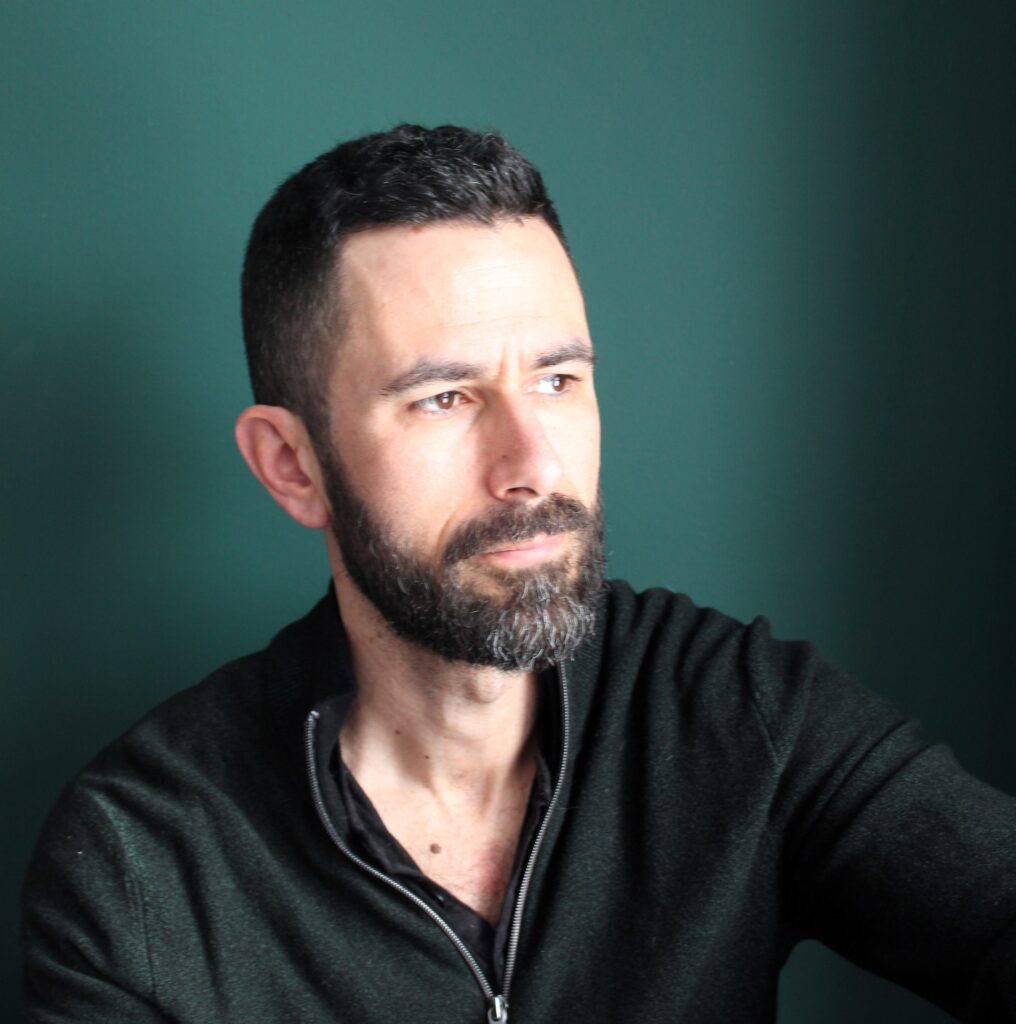
Michael Ducak is a warehouse manager and freelance writer whose short fiction has appeared in Sulphur, Litro, and Dreamers Creative Writing, among others literary journals.
He lives with his wife and pets in Guelph, Ontario.