NOTE: “An Old Man, A Handgun” is taken from author Jarupat Petchawaret’s 2017 debut collection อีกา (Crow). First published in 2015 in three installments of a Thai weekly news magazine, “An Old Man, A Handgun” is in a mix of Thai and Isan, a regional dialect of Lao written in Thai script. In a way that goes beyond local color or dialogue, Jarupat’s bold usage of the vernacular is infused into the narration itself, an approach which puts the reader in the thick of the realistic rural world. The story can be read as, among other things, an allegory of contemporary Thai politics.
Keep reading after “An Old Man, A Handgun” for an interview with translator Peera Songkünnatham.
อึกทึกครึกโครมขึ้นทันทีหลังจากได้ยินเสียงร้องตะโกนมาว่านางบุญถูกงูจงอางฉกกบาล ไทบ้านทั้งหมดทั้งปวงวิ่งตาลีตาเหลือกลงเรือนเพื่อไปดูเหตุการณ์ คำถามเซ็งแซ่โปรยบินเหมือนหมู่นกป่าแตกตื่นเสียงปืนที่ชำแรกขึ้นในความเงียบงัน เขาทั้งหลายรวมตัวเป็นกลุ่มก้อนตรงสามแยกกลางหมู่บ้าน ประชากรหกสิบกว่าหลังคาเรือน พร้อมเพรียงเกือบทุกหน้าค่าตา อาการแตกตื่นตกใจฉาบเคลือบในทุกใบหน้า สถานการณ์ที่เกิดซ้ำซาก ซึ่งดำเนินไปอย่างไม่ธรรมดา เร่งให้พวกเขามารวมตัวกันอีกครั้งอย่างร้อนรนใจโดยไม่ได้นัดหมาย
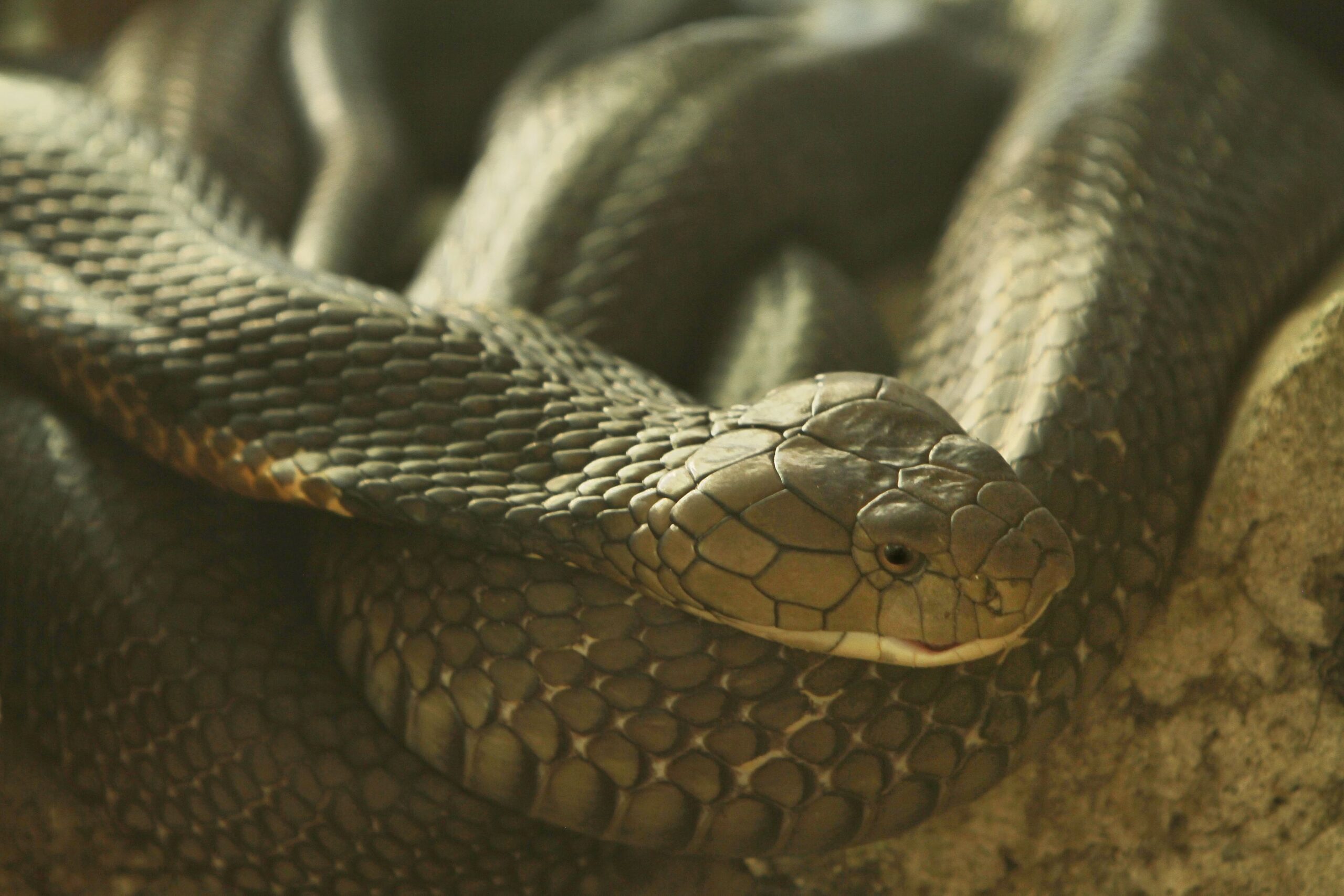
Chaos erupts as soon as someone yells Aunt Boon got bit in the head by a king cobra. Everybody hurtles down from their house to get to the scene. Questions fly up like a flock of birds startled by gunshot. A crowd forms at the three-way intersection in the center of the village. Almost everyone from the sixty-and-some households is there, every face cast in panic. An abnormal occurrence, one that keeps repeating itself, has driven the villagers to yet another impromptu meeting.
“The far end of Old Win’s cassava fields. At the foothills. Lying face down on top of her basket. The la-ngoak mushrooms she’d picked all crushed to bits,” explains Xiang Kanta, breathless and visibly terrified. The first to find Aunt Boon’s body, the twenty-four-year-old, for whom the honorific for a former novice monk has stuck into adulthood, says he was taking his cows to feed on the dwarf bamboo grass that grew dense on the edge of the cassava fields. After securing their ropes he headed uphill to the forest for some foraging, in case the spirits of the mountain would favor him with a big patch of la-ngoak mushrooms, as he hadn’t had anything at home to make breakfast with. His wish was granted. Just a few steps along a cleft in the rock and there—he spotted the shiny yellow delicacy packing the entire cleft, just their closed caps peeking through their white shells like miniature chicken eggs. He hurried to pick them, all the while glancing over his shoulders for fear another forager would come upon him and take his find. But, some time into filling his pouch fashioned out of a waistcloth, he was caught off guard by a guttural, rasping sound. He wasn’t quite sure if it was an actual sound of some critter or a figment of his imagination. A held breath later, he heard a woman scream loud and clear. One sudden shriek, then silence. Xiang Kanta, squatting motionless, strained his ears in the direction he reckoned the scream came from, but heard nothing. He filled his makeshift pouch with more mushrooms before leaving that rocky forest slope. As he walked downhill along a crevice, his ears kept picking up that strange rasp like the croaking of a tree frog, but he didn’t think much of it. He made it to Old Win’s cassava fields, where the furrows stretched to the horizon. The cassava plants, fresh after the rain, were sprouting dark purple-green leaves, a happy sight for their owner. Xiang Kanta was walking along a laterite dirt track when he saw the body of a woman in her early fifties, lying prone on top of a basket of la-ngoak mushrooms, now scattered on the reddish dirt, probably from her falling on her face. Part of her body had also lurched into a cluster of sal leaves crawling with red weaver ants. Xiang Kanta rushed to the body, thinking she might be one of the women from the village. He had a bad feeling as he sprinted to her rescue that she might have fainted from walking the mushroom woods to exhaustion, that maybe the woman had diabetes or high blood pressure like his mom. But once he turned the body over and saw the pale, purplish face with blood trickling from the nostrils and no breath, he was shocked. He quickly let go of the body and rose hesitantly to his feet thinking, Her body’s still warm, she probably hasn’t been dead long. That face, which kept growing darker, was barely recognizable. Only after staring long and hard did he realize this was Aunt Boon, a distant relative of his. He searched, unsuccessfully, for wounds on her arms and legs. But when he took her straw hat off, Xiang Kanta was staggered to find black blood oozing out into her silver hair. “King cobra!” he gasped, swallowing thick, gluggy saliva. As it dawned on him what must have happened, fear gripped his chest. The guttural rasp rang in his memory, calling up the story of one of his neighbors’ narrow escape from death several days earlier. Xiang Kanta left Aunt Boon’s body and hightailed it to the village as if rockets were strapped to his feet.
“บ่เห็นสิเป็นเรื่องแปลก… แถวนั้นเป็นที่ที่มันเคยอยู่มาก่อน สูก็รู้” พ่อใหญ่ทองสาผู้อาวุโสในหมู่บ้านพูดแทรกเสียงอึงอลของพวกไทบ้าน น้ำเสียงกระหยิ่มมีนัยยะซ่อนเร้น
“Nothing strange about it – that is where they used to live, you all know that,” says Grandpa Tongsa amid people’s clamor, a swagger in his voice.
“ข้อยพาไทบ้านโคกสง่ามาจับไปตั้งหลายตัว ตอนสิไถเฮ็ดไห่มัน” เฒ่าหวินกล่าวอย่างพรั่นพรึง “ตอนปลูกมัน บ่เห็นมี แล้วมาจากถ้ำใด หรือสิเป็นงูผี”
“When I was prepping the land for cassava, the folks I brought over from Khok Sa-nga caught quite a few of them,” says Old Win. “Didn’t see any during planting. What cave could they’ve come from? Or was it a ghost snake?”
“ภูบักใหญ่บักโต มันสิมุดออกมาจากฮูดังเจ้าอยู่ติ” วัยรุ่นคนหนึ่งพูดขึ้นอย่างคะนองปาก มีเสียงหัวเราะเกรียวกราว
“There’s a whole-ass mountain. What, you think it was your noseholes they crawled out of?” a teenager cuts in, eliciting guffaws from the crowd.
“ถีบปากมึงเด้อบักใด๋เว้า… แล้วสิเฮ็ดแนวใด๋พ่อใหญ่ ข้อยมืดแปดด้านบ่กล้าไปใกล้ไห่มันแล้วตอนนี้หกสิบไร่พู้น ตายคักบัดนี้ ถ้ามันเป็นทั้งงูผี ทั้งงูจริงข้อยสิเฮ็ดจั่งใด๋” เฒ่าหวินบ่น
“Watch it, or I’m gonna dropkick you in the mouth,” says Old Win. “So, what now, Grandpa? I’m at my wits’ end. At this point I can’t even go near my field. Twenty acres of cassava, gone. I’m done for. What if it’s a ghost that appeared as a snake, what am I gonna do?”
“ให้บักด่อน ลูกเขยบ้านโคกสง่า ไปจับขายให้พวกญาติพี่น้องมันดีกว่า บ่เห็นสิคิดยาก” นางพิณผู้ที่ถูกใส่ความว่าเป็นแม่จ้าง ที่เคยทำงานในพัทยากล่าวขึ้น
“Why don’t we ask Bak Don, the one who married into the Khok Sa-nga clan, to come catch them and sell them to his relatives? Problem solved,” says Miss Pin, who has been called a prostitute because she used to work in Pattaya.
Some like her idea, but the vocal mass of elders at the three-way intersection pull a face and gesticulate in objection. A man like Bak Don, they say, a man whose pubes started growing yesterday, probably doesn’t have the wits to deal with a king cobra. Sure, he’s been living out in Khok Sa-nga for some years, but who knows if he’s ever handled a snake. Best leave it to someone who knows the lay of the land here and has fought with snakes many times over. This rainy season, which isn’t even half over, five, six people in the village have already died by king cobra bite. Aunt Boon is the seventh. Now that Aunt Boon’s died, and died in the same manner as the others—with a lethal bite to the head—everybody in the community shudders with horror, because, for one reason or another, they all have to stoop toward the ground, be it to plant crops, plow fields, pick mushrooms, prowl for birds, pounce on frogs. Before you know it, you’re face to face with one of them. How can we possibly survive that, unless they’re exterminated today? Many rounds of tense discussions are had as everybody lingers together following Aunt Boon’s quick burial that afternoon.
The king cobras vanished eight or nine years ago; they only returned to propagate after the villagers’ cassava plants and rubber trees shot up and grew ripe for harvest. When the lush fields become a forest in their own right, wild animals like snakes won’t pick and choose what kind of forest to breed in. Natural forest or cash crop forest works equally well for them. Many a time has a villager been chased out of the forest by one of them. Some who go foraging in the woods don’t come back out alive. Anyone who steps on one of their nests and breaks their jealously guarded eggs will be hunted down. Anyone who has the gall to kill one of their babies, the same will be exacted on them—a life for a life. In the ongoing discussions, people have yet to decide on the best candidate to tackle the issue. Many young men have volunteered, but they’re woefully inexperienced. Look at their faces—a bunch of junkies and drunkards. Among the remaining brave and more or less sober young men, you won’t find a single one with the promise of perceptiveness and cunning to match those vipers’ instincts. Plus, according to those who’ve been chased off before, these are no ordinary king cobras: they also have shape-shifting powers. And so this weighs on the people even more. Finally, a group proposes that the one for the job has to be an old man with magic charms who has braved the jungle and caught or killed a snake, or at least been a hunter. The village will generously reward whoever gets rid of the snakes. At this point in the conversation, Bak Don shows up; the overfamiliar title Bak came from his youth in the village before he married into the Khok Sa-nga clan, the most famous community of king cobra handlers in the country. Questions are lobbed his way by the people who don’t want an old man to do the job, and the fellow answers every question to their satisfaction: yes, he has caught king cobras multiple times; yes, he has some expertise; no, he can’t promise that he’ll catch or kill off all the snakes, but if given the opportunity he’ll do his best.
No sooner does he receive an endorsement than the other group closes ranks behind their old-man proposal. A ruckus ensues, but it is cut short by the sound of a gunshot fired into the air. A voice speaks: Bak Don can go, but we won’t lend him our guns. You want to carry a mallet or a whip to hunt snakes, be our guest. This is a den of king cobras. Let’s see how many you can take out with your bare hands. Hearing that, all of Don’s supporters have no choice but to shut their mouths and yield, since not a single one of them owns a weapon nearly as potent as a gun.
Although the tension has eased somewhat, no one has stepped forward to be the slayer of the Kings of Snakes. Meanwhile, Grandpa Tongsa is talking a big game to the kids and teenagers, telling them how skilled snake hunters were back in the day, how one, in particular, made catching a king cobra as easy as picking a worm off the ground to bait a hook.
“Who was that, Grandpa?” one of the teens asks, incredulous.
“Me, that’s who,” says Tongsa, sticking out his chest. “I’ll go catch them myself. Xiang Kanta, my youngest son, is gonna come with me. All you newly born and barely grown people don’t know shit about my savvy as a hunter. You don’t even know I’m this village’s number one,” he says and turns to the gunowners. They nod knowingly, eyes shining.
“Oh, is that so? When sunbeam snakes bored through one of your paddy ridges, you couldn’t even handle it. Don’t be courting death now, Grandpa,” Miss Pin quips in contempt. Her paddy is close to the old talker’s, and her house sits next to his. That’s why she can see right through him.
“None of your damn business, you whore… I’ve crossed a hundred and one hills and seven seas. This? Nothing I can’t handle,” Grandpa Tongsa hits back, glaring at Pin like he’s going to tear out her throat. He tries to appear calm to avoid further back and forth with her. He has the upper hand now, doesn’t he? To appear worthy of the assignment, the old man cracks a smile to anyone who’ll look as if to signal that what he’d said earlier was just a joke, nothing meant to insult her in any way. Miss Pin, meanwhile, grits her teeth and visibly seethes. That is, until one of the gunowners clears their throat, a subtle threat that makes her soften her demeanor even as the ire continues smoldering in her chest.
“All right, let’s have Grandpa Tongsa tackle this. I’m worried about my cassava. Lots of money sunk into it. If them snakes keep roaming around, my investments will all go down the drain,” Old Win says, putting an end to the debate and frustrating the villagers who want the Khok Sa-nga in-law to take charge.
Grandpa Tongsa returns home and begins preparing for the king cobra hunt. As he packs a tote bag and tells his son Xiang Kanta to put the cows back in the pens, the latter winces at the confirmation that they will be tackling the big thing on everyone’s minds. Recalling Aunt Boon’s dark, purple face makes his hair stand on end. He once saw a king cobra many years ago, saw it without it seeing him. This species of snake has an exceptional sense of smell. Any prey that enters their territory will leave a scent, easy to track down wherever it goes. That day years ago, the king cobra stood tall above a rock ledge upwind. He was hiding downwind. The distance between them, he estimated, was about fifty feet. The wind was powerful, as it was winter. This set-up meant that whoever was upwind couldn’t pick up the scent of whoever was downwind. A lucky day for him. His heart pounding, Xiang Kanta spied on Bak King Cobra’s formidable bearing. The serpent flicked his tongue and lifted his neck upright like a hermit’s cane. His upper half, raised above the rock, was grey-and-black striped; his belly, light yellow; his head, segmented like the rind of a sugar apple; his eyes, small and sharp; his air, cruel and cool. He was probably after prey. The mountain back then was teeming with boars. Those Solid Tuskers had no fear of king cobras, but would never challenge them face to face. Boars ranked among the most notorious thieves of the hills, their jaws nipping everything in their path, plant or animal. Maybe one of them had intruded into Bak King Cobra’s den, so he was on the lookout for the culprit, to chase and chomp down on its thick hide. But most likely Solid Tusker was long gone by then, down toward the Mekong, leaving Sugar Apple Head to hover vengefully over the hill.
Xiang Kanta tries to put the brakes on his father’s foolhardiness, but the old man lashes out, yelling, What a waste of being born a hunter’s son, won’t he look at the five dogs wagging their tails under the house, ready to trot along after his old ass no matter what hill or knoll he trudges up; they are not hunting dogs, just mongrels born out of a chance mating in the streets, and yet they’re braver than his own son. A bit later a gunowning neighbor drops by to bring them a shotgun and a handgun—nothing the two didn’t use to carry, but it’d been years since the police took away what they used to own. A pretty gut-wrenching loss that was, but they could only watch the guns leave their sight with longing eyes and mouths agape. Admiring the guns of the neighbor with the wherewithal to get them registered, stroking them with his wrinkled hands, Tongsa delights in the touch as if he was caressing his wife’s body in her younger years. The senior is drawn to the shotgun but it doesn’t seem he’ll be able to bear the weight; time has taken back much of his strength. The junior grabs the handgun. Stroking it, the faint-hearted young man feels a strange rush of courage to the soul. Xiang Kanta starts to believe in himself again. He used to carry his father’s guns, but that was him as a youngun. Defenseless flying lemurs and palm civets would bow to him and his gun, but once it came to a herd of ten or so Solid Tuskers, he had to drop it and run up a tree. Thinking of that makes him chuckle at himself. The man approaching the fateful juncture of life at twenty-five years of age turns to his father and gazes deep into his eyes. If he can measure up to just half of this spirited old man, his birth won’t have been a waste.
But neither father nor son gets what he wants. The mismatch between muscle and mind forces the young man to carry the shotgun, and the wrinkled old man, the handgun. Before going down the steps of their stilt house, the old man rummages up the notebook in which he had copied the spell for protection from serpents. Actually, he can recite it from memory; he’s just worried about messing up the steps. Finally, the indispensable: the bulbs. There are two kinds of anti-snake bulbs. The first is wahn ngu, the Snake Bulb, which shoots up from the ground like a shallot scape, its leaves shaped like spider lily leaves but smaller. The bulb is the size of a big toe. Of course, the old man planted it all around the house to ward off snakes. He didn’t take much care of it, though, so most of the bulbs died; just two clusters remain. This bulb is not an antidote to snake venom; it only stalls the venom’s travel to the heart long enough for the victim to be carried out of the forest for treatment by a healer who is well-studied in the sutras, which require the use of Mongoose Phlegm leaves and magic spells. But that’s no longer necessary, is it, now that one can dial 1669 and be rushed for a serum injection in no time. The second is wahn tone, the Bulb of Resistance, a very rare wild herb native to the Phu Phan mountain range. Back in the day, Communist insurgents ingested it for impenetrable skin. It provides a level of protection against bullet tips and animal jaws, but on one condition: never pee it out. Not even when you have to go so desperately that your barrel’s about to blow. The moment urine is discharged, so is the bulb’s potency. If you ingest it and can’t hold it in, then you’re on your own. Wahn tone is the size of a ping-pong ball, rough to the touch like ballsack-shaped purple yam whose vines grow over house fences. This kind of bulb is easy to grow, no need for much attention, but everybody who grows it will plunge into poverty. Even if they come from the most impressive wealth, they will be left with nothing to their names, because much of that wealth will either be sunk into money pits or sucked dry by the worldly desires their hearts are hooked on. As for Grandpa Tongsa, he owns nothing bigger or better than what the average man owns; he’s poor in money and resources, stuck behind the times in magic spells and tedious old tales, ignorant of what’s going on in the community, yet he has a haughty attitude toward neighbors like Miss Pin. Most of the elderly locals know his background to some extent. He once served the country as an army conscript. He often boasts about his tour of duty in Vietnam alongside his eldest brother, and how seasoned a fighter he was. But no one knows whether the deeds he brags about actually happened. Because of this bullheaded braggadocio, some other villagers took to looking down their noses at him; the friction has festered into a deep chasm that is difficult to bridge.
Father and son walk down the house’s front steps with determination. Their eyes, unafraid before the crowd, shine more brightly than in recent days. People in the father’s generation entrust the two with their hopes. Some of the women in their middle-age to golden years wait in front of their houses to give the pair a big round of applause as they walk past. These women’s nieces and nephews and grandchildren, who know jack squat, dance like little monkeys to cheer them on. Grandpa Tongsa, aged seventy-five, shambles forward, displaying a solemn and prideful smile for the length of the village’s main road. Xiang Kanta follows close behind with the shotgun and tote bag slung over his shoulder. Although the dad and the kid are a far cry from each other in age, they are joined together, some other villagers feel, by the same laughable quality. Those people don’t say anything out loud, but internally they flay the two with curses, wishing them death in disgrace like a dog that floats water-swollen along the Mekong, so the maggots bore through their flesh and the crows fight to tear them in strips. The sooner they meet their fate, the better.
The five dogs follow in formation. All throughout the parade, other village dogs bark and snarl at the five, but none dare come out and challenge them, being well-acquainted with what they’re capable of. Their pack attack strategy, with its perfect coordination and its brutality, earned them the notoriety.
So where, exactly, is the lair of the king cobras? What forest, what field do people say is teeming with them? The far end of Old Win’s cassava fields, the strip where Aunt Boon was found—is that their temporary turf, or permanent home? How did Aunt Boon run into them? The two don’t know. No one in the village knows. The air of early rainy months is hot and humid. Having hiked to the mountaintop, the pair are drenched in sweat. Still no sign of king cobras. Seems like the hunt today will be for naught. Grandpa Tongsa sits down, trying to catch his breath, though his spirit hasn’t flagged. Xiang Kanta is still going strong. He sweeps his eyes over the surrounding area. This place isn’t very far from where he found Aunt Boon’s body. It’s a high mountain, on top of which rock formations of varying sizes huddle under the shadow of trees. Underneath the rocks there is a natural crawl space of parched earth. He isn’t sure whether king cobras prefer that kind of desiccated ground like cobras do. But two species of venomous snake shouldn’t be too different from each other. They are cold-blooded creatures, so it stands to reason that they prefer to live in warm places, especially during this hatching season. His dad’s observations along the way make him peer into every stretch of the woods, but he finds nothing save the yet-to-open shells of la-ngoak mushrooms that he can’t help digging out from the ground and putting in the bag time and time again.
The sun has moved to the west side. Grandpa Tongsa is already on his third Bulb of Resistance, and still no king cobra. They did find traces. In hatching season, one must get near a nest to find one. The old man is aware of that, but fuck if he knows where a nest might be. If he has to pee for the third time, he decides, he’ll call it a day and come back tomorrow. This evening his joints and muscles will definitely give him grief. Right now he’s doing fine because of the wahn tone, which boosts not only the skin’s resistance but also the body’s endurance. Wahn tone does not sprout that many new bulbs on its own. It is easy to grow, but what a pity he hasn’t been very good about giving it attention. The old man wonders, actually, why he tends to neglect things that will keep him in good health. This evening he will ask for more wahn tone from his sworn brother in Lahd Village. Gotta tell Bak Xiang to take me there, he tells himself. The fight against serpents may take several more days yet, so he needs all the help he can get with his physical and mental stamina.
The five dogs brought along to serve as extra noses are no help at all. They’ll run off barking for a tense moment, but what they bark at will turn out to be one inconsequential thing after another: a skink, a rock gecko, a tree snail. Sometimes they bark senselessly at nothing, as the bushes they stick their noses into are empty, save for the humid wind signaling a monsoon.
The late afternoon sky rumbles and roars. Grandpa Tongsa pees in his pants for the third time. The sight of the path downhill deflates him. It’s not so much the jagged rocks or the thorny branches that daunt him; it’s the inevitable questions from dozens of expectant souls who have pinned their hopes on him… What should I tell them, considering not one troublemaker has shown its face? The mountaintop, silent as a graveyard, seems to be toying with the old man. That roaring sky, too. The wind grows stronger and stronger. Multiple times he cups his hands around his mouth and calls out to his son, only to hear silence in return. Did Bak Xiang run right into one? He casts his gaze down the east side of the mountain, down to where the Mekong flows slowly by. All the dogs disappeared with his son. A gust of wind on the summit rips dry leaves off their stems. Just one split second after expelling liquid waste from his body, he’s beset by joint pain squeezing his every sinew. Grandpa Tongsa fishes out another Bulb of Resistance, chews it up, and washes it down with water. Wahn tone has taken the place of medicinal moonshine as his go-to remedy for sprains. It’s such an effective painkiller that he wants to munch on it every day, in fact, but too bad there’s so little left at home. With wrinkled fingers and yellowed, brittle nails, he pulls out a clump of Phya Naga tobacco from the packaging, rolls it with white Kakaydao cigarette paper into a tube, lights it and sucks on it, making the tip glow red, before blowing wisps of white into the wind. In the western sky, vast black clouds loom over the forest. Good drugs like this take no time to kick in. At any rate, with the dogs and the shotgun, it’s not like Bak Xiang is getting into a tussle with king cobras. Tongsa totters down from the mountaintop with renewed vigor. Blasts of wind make him stagger on his feet, so he needs to always hold on to a tree branch during the descent. Each time he slips and falls on his butt, he pushes himself back up, dusts himself off, and keeps on walking. Not that he’s not nervous: what’s going to happen if he runs into a king cobra on this leg of the journey? He stops his intrusive thoughts from barging in. He’s already struggling to stay on his feet against the deafening wind; if a king cobra rears its ugly head too, then say goodbye to pulling the trigger in time. Turn the clock back thirty years, and even a ngu suang, a Naga King, wouldn’t intimidate him. Actually, none of this is—or would be—his business had it not been for the promised reward. To end up rich and happy as a grizzled old man would be neat. Problem is, no king cobras have been found. Are they actually out there? Or is it something else we’re looking for? Of course they’re out there. If it hadn’t been for a king cobra’s fangs, how could E’Boon have died that unnatural death? Powered by the Bulb of Resistance, Grandpa Tongsa makes it to the plain with his body intact. Not one drop of rain touched him on the way down.
His band of supporters has been waiting with bated breath. Right away, dozens of questions pour out of their mouths. The old man stammers out responses under his breath while looking tense and ready to snap. The listeners find the answers satisfactory nonetheless.
“This evening Bak Xiang is gonna bring a carcass down here, just you wait. Don’t know if it’ll be a male or a female. I’ll go back up another day.”
Xiang Kanta sits sullenly on the ground under his house after making his way back from Lahd Village. Miss Pin asks to see the king cobra’s carcass. He lies through his teeth. He doesn’t even know what his father has told people; he simply doesn’t want Dad to lose face. Good thing their dogs didn’t die. While separated from his father, he and the dogs had been driven out of the forest by a male and a female, each one nearly four armspans long. The Sugar Apple Heads moved their black bodies as fast as the Shinkanzen trains he saw in a movie on VCD. Didn’t even have a chance to turn around and pull the trigger. Both dog and man took off running until they reached the Mekong. The memory still shakes him up. As soon as he was sure they’d stopped following him, he rushed back to the village out of concern for Dad. He was hoping to rally the locals to the mountain to help find the man, not expecting the senior to have dared hike back through the forest alone, to have been sitting grim-faced here at home, upstairs, long before he returned.
“Remember, whatever happens, don’t you be afraid: I’m still here,” the old man pats the son’s shoulder for the sake of morale.
Uneasy, Xiang Kanta meets his father’s gaze. He sees fear reflected in those old eyes as well.
Two dead bodies the next morning send the village into chaos once again. Word is, it happened far away from where Aunt Boon got it in the head, pretty much a mountain away. But what’s noteworthy to Xiang Kanta is that this is the hillside that saw him chased off yesterday. Those who placed their trust in Grandpa Tongsa’s skills express only the lightest criticism of the old man for not having put a decisive end to the issue. The silent observers, however, come together to share their suspicions, which multiply among them. To a king cobra, it is an extremely serious offense for someone to harass it within its territory. And with how strong the wind was, how could Xiang Kanta let his father make the dangerous trek down by himself? It seems very suspicious that Grandpa Tongsa and his son descended the mountain separately. Also, no king cobra carcass has been shown, nor has its existence been reaffirmed by the pair. But these suspicions are shared quietly; none are divulged to the old man.
The two dead were teenage brothers who’d been keeping a night watch over a cassava field. Fangs left puncture wounds on their necks and foreheads. After being bitten, the older one most likely spent his last moments scrambling away to die in the middle of the cash crop forest, which lies close to a brook packed on both sides with rocks and slender bamboo. On his neck are two blackened spots. Dark purple-green venom blisters ring the wounds. A trail of black blood has crusted over. His face, drained of color, looks like pickled green mango. A caplock musket loaded with pellets lies on the ground about four armspans away. Presumably, he was intent on fighting to avenge his brother’s death, which must have happened early in the evening. Judging from his bulging eyes, stiff body, and ripped clothes, the younger one probably tried to run from Sugar Apple Head and met his end at the shack overlooking the crops. Sadly, a proper funeral is out of the question for such deaths. Bak Don and some other villagers step in to bury the two uncremated. Their grave lies unvisited by Xiang Kanta and his father. Even more egregious is that out of all the gunowners and that whole crowd of cheering women and their nieces and nephews and grandchildren, not a single soul shows up.
“They’re gone. What’s the point of lingering around the grave? And why should I mourn their unnatural deaths? You all know what duty I have.” Grandpa Tongsa’s cold remark hits those returning from the grave as they pass by his house. Everybody keeps their eyes glued to the ground while anger sears their chests. But no one dares talk back.
“And I can’t wait to see how it turns out for the immortals,” Miss Pin blurts out as she sits winnowing rice in her front yard, ostensibly in nobody’s direction, as if talking to the breeze. Grandpa Tongsa stomps on the floor inside his house and yells, “Let’s go, Bak Xiang. We’re gonna blow their heads off. Too much yip-yapping around here.” The pair goes down the front steps, frowning. The five dogs follow, circling around their owners. Miss Pin’s pursed smile brings up the rear.
Xiang Kanta comes clean to Dad as soon as they begin ascending the mountain. The story fills the old man with dread. He fishes out a bulb of wahn tone from the tote bag and chews on it while leafing through the notebook of Pali spells so he can recite some. He grabs another bulb and hands it to his son, saying, A spring chicken like you must take it only during a fight. The instruction is due to the meager supply, so it’s far from some special trick he’s imparting. Not that he doesn’t love or care about his kid, but a young man is naturally more agile than an old one. So long as his kid stays alert, the king cobras won’t best him easily. They go around the foothills to take a different path up. This is the side where the two brothers were killed last night, the same swath of woods from which Xiang Kanta and the pack of dogs were chased off. The path is steep and rocky. It also cuts through a thick kasa bamboo forest, difficult for both human and snake to navigate, but an accessible terrain for dogs. A brave hunting dog could have fought the snakes head-on yesterday. Thinking about it now, the son has a bad feeling that the snakes may have numbered more than two. The dogs were split up, each fleeing in a different direction. He didn’t even have the opportunity to look back. Only when he made it out of the forest to the wide sandy Mekong riverbank—wide because this early in the monsoon season the water hasn’t risen—and saw the dogs paddling down a big stream that flowed into the Mekong, was he sure that both he and they had made it out alive.
May the winds not act up like yesterday. And may we meet them on a rock flat or an open beach by the river. That wish repeated like a mantra isn’t coming true, it seems, since the dogs are already baying and snarling up ahead. The two men freeze. Looking up at the ruckus, they see three barking in place and two dashing up and down a rock ledge. The slender kasa bamboos can grow thick; here, the tops of their stalks curve into an umbrella-like archway; their rhizomes are shaded black since sunlight fails to reach the ground. Darkness hides what the eye wants to see. The young man tightens his grip on the shotgun. The old man’s eyes zero in on the dim silhouette standing solo. Tree or snake, can’t tell for sure. Judging by the strange way the dogs are whining, the snakes must be lying under the thicket. But where? The son takes the lead. The path up to the summit offers very few spots with a secure footing, and its steep incline complicates movement from one of those spots to the next. The old man looks around after every step. His nerves begin to fray; the thought of serpents rearing their heads gives him goosebumps. No, it isn’t that he’s never faced a king cobra—he has slain at least five. But every one of those he fought one on one, armed with a gun and the vigor of youth, which gave him an edge over the opponent’s fangs and the venom gland under its brain. If another face-off happens today, will his aim be impeccable like when shooting used to feel as natural to him as grabbing the target by hand? His resolve flagging, the old man follows hesitantly behind his son.
The dogs continue to dash around, cutting above and below, leaping frantically from this rock to that. The bases of the bamboo forming the archway plunge vertically below Dad and Son’s foot level. So long as the dogs bark, the king cobras will stay put. Under no condition will they emerge to face foes that outnumber them, unless they are assaulted directly. If the five dogs are fearless enough, victory won’t be hard to secure with their pack-attack strategy, which may require sacrificing one of them. But none seems willing to take the lead: not because of cowardice, but due to the terrain that gives no one the upper hand in a fang-to-fang fight to the death. Their battle positions are such that the dogs refuse to strike whereas the snakes refuse to retreat. If the Sugar Apple Heads leave the bamboo thicket, they will no doubt be ganged up on by the dogs. And if the dogs blunder into the bamboo, they will be finished off by the snakes. The longer the stalemate, the more tense the pair of onlookers. The slightest movement from a king cobra, Xiang Kanta decides, and he will fire.
Before long, the situation takes an unexpected turn. Another Sugar Apple Head slithers under the rock ledge where the two men have their feet planted to keep from slipping. The old man sees it and, breaking out in goosebumps, quickly taps his son’s back, but it’s already too late: the tail vanishes under the rock as Xiang Kanta turns around. The two men scamper away, clumsily grasping some woody vines to pull themselves up toward a steep dirt wall. The son grabs on to the father’s arm while also tilting his neck trying to look under the rock ledge. From the outset he had suspicions. That patch of earth underneath is so dry it’s cracked—can it be…? Why aren’t the snakes in the bamboo making an escape? He looks doubtfully at his father. The latter has managed to hoist his butt onto one of the hard, woody vines, his body curled up and shivering like a malaria patient. It isn’t panic or fear, but exertion that makes his limbs tremble. Xiang Kanta, holding onto a reliable branch with his left hand, bends down to look under the rock. He scans its perimeter but finds not a shadow. The space the snake slid into seems like an antechamber which, from all appearances, probably leads to a through cave with an exit on the other side. This rock ledge is the size of a house. The steep incline where he stands prevents him from seeing much under it. But there is one way to see through the thicket into the cavern: Xiang Kanta must climb the tree that stretches one of its branches—a rather lone branch, presenting a high risk of falling—in the direction of the other cliff. If he can make it to that branch and actually see the snake inside the cavern, then he can execute the troublemaker without breaking a sweat. For a young man like him who is also a seasoned climber, it probably won’t be difficult to get to the branch. The tree before him shoots up parallel to the dirt wall; monkeys can probably saunter down that horizontal branch while bouncing their behinds. As for a man, so long as he isn’t so careless that he lets himself free-fall down this cliff face, success will be well within reach…
“Good idea. If he has a nest in there and you can blast his mate’s head off, he’s gonna go check up on her. Provoke him, and then you shoot him dead next to his mate… Go ahead, Xiang. Don’t worry about your dad.”
It takes Xiang Kanta a good deal of clambering to launch himself off the dirt wall, his hands clutching vines, his body swinging back and forth like a gibbon in a tree. Xiang Kanta now lands on the ground roots of the destination tree, a hai füay or banyan tree. The aerial roots of this tree, if it sits by the water, can blacken and resemble the full beard of a prehistoric man. With his torso bowed, he climbs slowly. A woozy feeling surges when his eyes inadvertently look down, where the canopy completely blocks the view of the winding stream that he and Dad just crossed. When climbing a tree, the warning goes, do not look down or your won’t have the guts to go on. But how do you prohibit the eye from using its peripheral vision? He has no fear when it comes to trees; just a split second’s look probably won’t make him shit his pants. About fifteen feet of trunk, he gauges, from the ground roots to the branches. The one he’s eyeing to perch on to gain a vantage point is as big around as his leg. Banyan wood is relatively elastic: it isn’t prone to breaking like some other trees. A violent crash, the kind that happens when a whole felled tree tumbles to the ground, usually just results in rips and tears for banyans. A branch this size can easily support his 145 pounds. Xiang Kanta reaches his destination safely. His father, who’s been watching, breathes a sigh of relief. As soon as the son gets into position, he sights a coiled-up Sugar Apple Head incubating her eggs in the cave’s antechamber. She stays completely still, like a coil of hemp rope. How strange that she’s so indifferent even as the dogs bark loudly all over the hill. Or is this part of a savage killer’s modus operandi? The imperturbability makes her look formidable indeed. She is positioned only a few armspans away from Dad. The rainy season’s westerly wind is blowing in the reverse direction. With Dad above her, suspended near the dirt wall, she doesn’t pick up his scent. The snake is motionless as the young man lifts his shotgun to take aim.
The branch goes crack right when Xiang Kanta is about to pull the trigger. His heart skips a beat. He reflexively lowers the gun. Whoa! he blurts out. The branch is about to break. The young man catches a glimpse of a groove on the underside of the branch where it connects to the trunk. Sure enough, it was a hollow; an abandoned beehive is inside it. He hastens to make it back to the trunk, but it’s too late. The banyan branch goes crack, crack, crack in quick succession;the wood gradually tears apart from the inside; white sap oozes through the bark in blisters that drip, drip, then flow out as if it were rainwater coursing down a corrugated zinc roof. Finally the branch rips itself free from the trunk, taking Xiang Kanta straight down with it, his limbs clung snug to the branch. A shrill cry can be heard echoing throughout the hillside… Dad! And then again, Dad! as the dense canopy below swallows him up. Then silence—absolute silence. Tongsa, stupefied, can only hang his head like a dying ape, having watched his son plummet into the abyss while his heart dropped into his stomach, helpless and unable to help.
He was stunned for a long while. His heart shrivels with worry as he doesn’t know if his son is dead or alive. Why on earth did I bring him here? Tongsa tries to descend from the vine, but the position he’s in makes it hard. His arms are fatigued; his legs are numb down to the toes from remaining seated for so long. The Bulb of Resistance doesn’t help with numbness. If he can’t swing himself to the dirt wall in front and winds up only grabbing at air, he may end up rolling downhill, in which case he’ll have a one-hundred percent chance of landing smack in front of the cavemouth, as that’s the gap between two levels of rocks, a natural basin jutting out like a paw to catch objects before they fall to the foot of the mountain. And if he ends up there, balled up and whimpering, he’ll definitely come face to face with the female king cobra. He doesn’t really know if she’s there; he’s inferring from how Bak Xiang lifted the gun just now to take aim… before the branch broke off and took him down the cliff. What will become of my boy? Befuddled, he can’t decide whether to leave the spot—he wants to, but if he doesn’t pull it off he’ll land in front of the She-King Cobra. And he can’t stop worrying about his son. Will my boy die, or just break his limbs? Below is the big stream that feeds into the Mekong. That’s a relief right there: hitting the water probably wouldn’t be so bad, he probably wouldn’t break his neck. The concern is that his arms and legs could snap when they pound against branches on the way down. May somebody find him before things get any worse.
Nature isn’t playing tricks. Heaven isn’t playing favorites. Everything, every being, is abiding by the rules. Early monsoon season means that, every afternoon, dark clouds will gather and violent winds will rage with no regard for anyone. Some monsoon days the sky merely sends rumbling winds to disturb the earth’s peace. But some days—like today—it rains down hailstones with enough force to rupture roofs. It’s coming again, and coming with no regard for Grandpa Tongsa’s spells. The wind rips leaves off trees. Its invisible hand shakes the vine he’s sitting on, tossing him about. He’s frightened, his heart palpitating, as he struggles to balance on the vine. He grasps like a drowning man at a tree branch hanging in front of him. His hand now undershoots, now overshoots, missing it ever so slightly. Meanwhile the sky casts down big drops of rain. The first rainstorms of the year tend to spread out their warning shots in mad rushes of wind before blinding the earth with a downpour. The splats on his grey head feel like strikes of a wood-carving mallet, at once a physical and psychological assault that makes him want to hurl insults at Sky God’s forefathers. But he no longer has any time to run his mouth blaming the rain or whatever else. Every effort goes into finding a way to get off his seat on the vine without tumbling down to the mercy of the She-King Cobra. As he’s grasping at air, he’s surprised to see his five dogs suddenly retreating from their positions on the rock and rushing down to the path he and his son took a while ago. The old man follows them with his watchful eyes. Even if they’d stayed, they wouldn’t have been able to carry him down from here. It is strange, though, that they seem to be heading somewhere. Nothing stands out to him, but did they see something? All five sprint back down the path. They are no less attached to Bak Xiang than to him. Maybe they can sense where he is. Once more, he makes a wish, this time also beseeching the ghosts and gods of the hills to protect him and his son—and their dogs, too. Falling silent, Grandpa Tongsa lets the rain bear down on him until he’s drenched. He pulls out another Bulb of Resistance to chew on, not caring to find out whether he has or hasn’t pissed his pants.
After the downpour, the rain-cooled air is completely still. These conditions make it easier for serpents like king cobras to catch the scent of intruders. Without the old man noticing, the first of the king cobras emerges, calm and cool, from the thicket of bamboo stalks. The creature flicks its tongue, scanning its territory for abnormalities. Moments later, high on the rock ledge, the grey-and-black stripes rear up the segmented head. The snake spreads its hood, ready to strike. In that instant, Grandpa Tongsa, after many failed attempts since before the rain, finally grabs and climbs onto the tree branch in front of him. He turns, sees the king cobra bolt upright no more than four armspans away. The old man’s blood runs cold. His arms and legs go weak. But his mind’s made up: he pulls out the gun, carefully and courageously aims it at the king cobra’s head. Meanwhile, several other king cobras, all bigger, slither along the surrounding rock crevices. They are closing in on him.
* * *
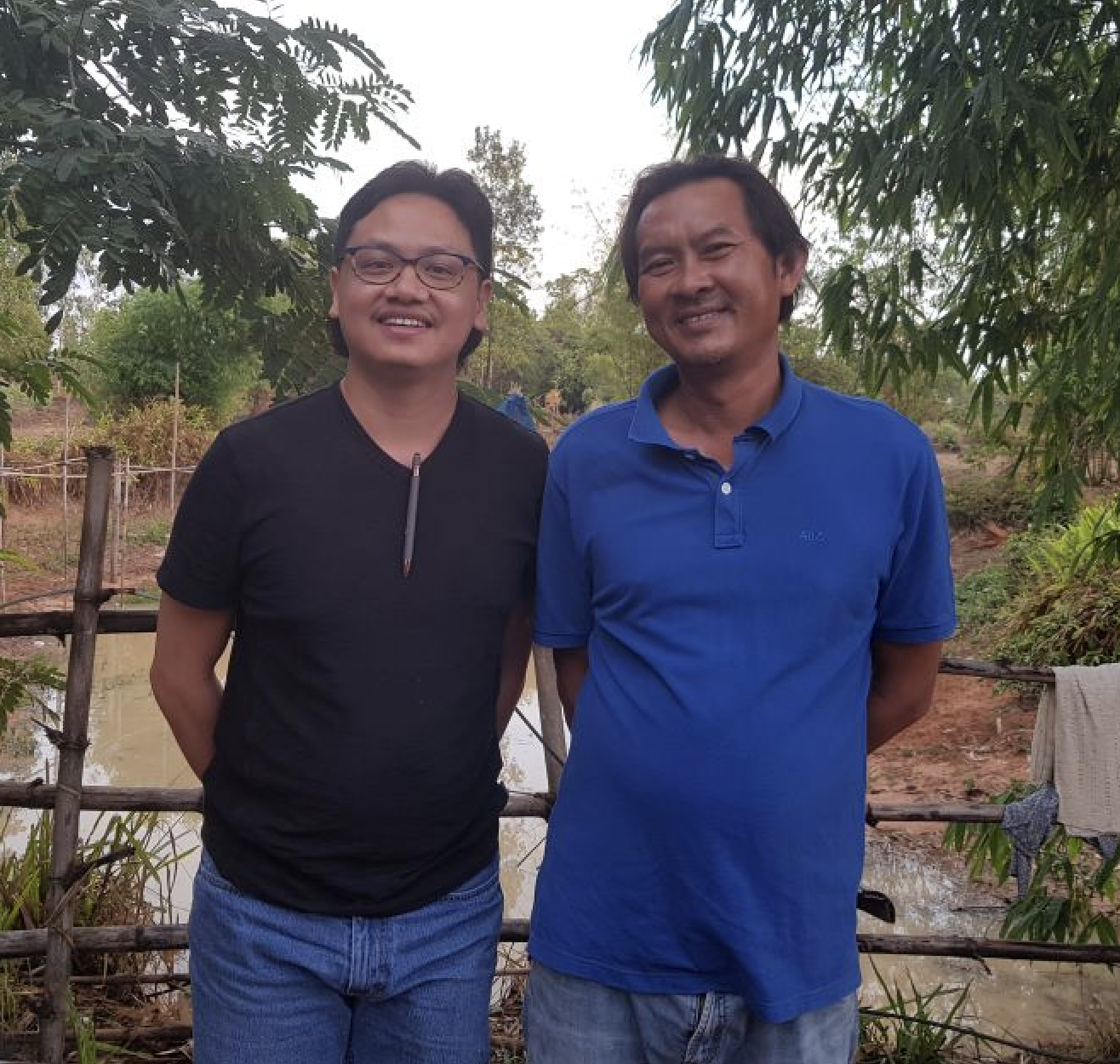
Peera Songkünnatham (in the black shirt, on the left) is a translator from Sisaket City, northeastern Thailand. Currently based in Indianapolis, Peera works between English, Thai, Spanish, and Isan, a mix of Lao and Thai from their home region. They run the website Sanam Ratsadon: An Archive of Common(er) Feelings which showcases Thai literary artifacts of political significance that would otherwise not circulate in translation.
Jarupat Petcharawet (in the blue shirt, on the right) is a writer from northeastern Thailand who lives in the fields outside his home village close to the Mekong. His fiction is notable for its realistic worldbuilding and its bold use of the vernacular language—and along with that, vernacular understandings of nonhuman powers. Jarupat is most known for อีกา (Crow), his 2017 debut collection of stories of rural doom which offers a fresh spin on ancient Lao apocalyptic literature.
Author photo credit: Maliwan Petcharawet
* * *
Interview with translator Peera Songkünnatham
Editor Anne O. Fisher: This story in the original is told in two languages, Thai and Isan, a dialect of Lao written in Thai. How did you render the difference between them? Or rather, what are the patterns of usage of each language in the story, and how did you represent those patterns in your translation?
Translator Peera Songkünnatham: Jarupat actually prefers to leave the in-between language he writes in unnamed. That is to say, he’d rather I not specify it’s written in whatever combination of Thai and Lao and Isan, but call it “a language from Southeast Asia.” But avoiding naming a language wasn’t feasible; he understood and let me off the hook. But I still think about the fact that he considers his language so uncounted, so marooned that he would rather not attach nationalist nor ethnonationalist nor regionalist names to it. Maybe it’s simply better to not have to pledge allegiance to something that never really had you in mind.
Switching between Thai and Isan in writing can be as remarkable or as unremarkable as code-switching between Lao and Thai in conversation. The generation of Isan writers who broke through to the Thai mainstream in the 1970s generally reserved local dialect for dialogue and used pristine Central Thai in the narration. This segregation served to make Isan life and mind translatable to Thai readers of every region.
We’re in an era of desegregation. I believe it was songwriters who led the charge by blending more Lao into Isan lyricism and narration, finding great success among the listening public over the decades. Later generations of Isan writers began filtering more words and syntactical quirks and poetic turns of phrase from Lao and other languages into the texture of the narration which includes characters’ inner worlds.
Jarupat Petcharawet’s prose goes pretty hard into Isan in the dialogue. But in the narration it is more moderate: here and there a Lao word, mostly for physical things. Occasionally the author provides a Central Thai gloss in parenthesis. I count 11 glosses total in this story’s original manuscript, 4 of those in the second paragraph: basket, patch, laterite, sal. I’ve begun to think that this act of translation not only serves monolingual Thai readers but also Isan readers who may not be as familiar with the culture and language because they’re younger, more urbanized, or because they grew up around other indigenous languages in northeastern Thailand.
Outside of its ethnological value, the occasional gloss adds on to the literary effect of placing the narrator inside the world he is depicting. The narrator is never directly involved in the stories, but with the abundance of free indirect discourse, where the narrator’s voice blends with the characters’ thoughts, you have the impression that he is speaking from where the story took place. In other words, he’s bringing you into his world by using your words, some of them explicitly as glosses; he didn’t leave his world to tell you about it.
So, how does this translate to English? Not so much, I suppose. I am bringing you into Jarupat’s world by using your words and grammar, but I did have to leave and move into your world to tell you about it. Both Thai and Isan become English. There probably is a difference in register and diction, especially in dialogue and in free indirect discourse, but that difference doesn’t always come from language choice.
AF: “An Old Man, A Handgun” is permeated with the natural world of plants, animals, earth, water, and weather. How much did you feel the need to gloss or otherwise explain meanings to readers? It can be a risky endeavor: features of the natural world can give more meaning to characterization, setting, plot, but then you might weigh down the text with explanation. So that extra ballast has to be worth it. I’m thinking about this not in terms of more prominent items like the snake bulbs or the la-ngoak mushrooms, but in terms of more subtle presences, like the sal leaves and red weaver ants in this passage:
“Xiang Kanta was walking along a dirt track when he saw the body of a woman in her early fifties, lying prone on top of a basket of la-ngoak mushrooms, now scattered on the reddish dirt, probably from her falling on her face. Part of her body had also lurched into a cluster of sal leaves crawling with red weaver ants.”
PS: I don’t have as strong an ethnologist’s impulse as I should given my background in cultural anthropology. But I do want to honor Jarupat’s choice of referring always to specific things in the natural world. After all, the natural world is a very important site of Isan cultural heritage and an object of great nostalgia after many decades of deforestation, monoculture farming, mechanization, and urbanization in northeastern Thailand. What’s fresh about Jarupat’s approach to the Isan natural world is that he conveys this shared sense of cultural and ecological decline through horror stories instead of pastorals.
So in those other moments where the natural world is just there and has no plot relevance nor semantic resonance nor sensorial strikingness, the opaque names can function as a baseline of grainy realism on which more intense, near-fantastical moments are built. The original didn’t explain those names either save for an occasional Central Thai gloss, and I, a city kid, didn’t know what a lot of them looked like until I looked them up online.
So, I try to be specific but also don’t feel the need to explain; sometimes I do come up with a new English name or an extra adjective based on some striking quality of the thing. In the case of sal, I actually took away one adjective: the correct tree Shorea obtusa is known in English as “Siamese sal”; the proper sal tree should actually be Shorea robusta. (Admittedly it’s a bit jarring to my ear to use this Indian name sal which has its own associations in Thailand with the Buddha’s biography.) The original says, bushy jik (teng) full of red mother ants innumerable, giving both the Isan and the Central Thai names for the tree. An Isan reader encountering jik/teng/sal foliage full of red ants might daydream of red ant eggs, a seasonal delicacy as sought after in the wild as the la-ngoak mushroom (which I did stealth-gloss by calling it a delicacy), or they might picture leaf nests the ants weave together. But in this moment in the story, the Isan reader will most likely recall the ants’ painful acidic bites. The English for this species of ants is “weaver ants” or “green ants,” so I picked the former and reinserted “red” from the original to nudge the reader into being aware of their acid or at least their bite (green is the color of their queens, whose big eggs are the delicacy). I think the English construction “crawling with” does the trick here by painting a picture that will elicit a visceral reaction to danger whether or not the reader is aware the crawling foliage is likely an ant nest.
AF: Your initial draft had the sentence “If he can measure up to just half of this spirited old man, his life won’t have been a waste,” but in the course of editing you changed the end to “… his birth won’t have been a waste,” to better reflect the Buddhist worldview. There’s also the part where you had originally written “…much of that wealth will either be sunk into money pits or sucked into the void of desire in their hearts,” but when I suggested changing “void” to “abyss,” you wrote me that this set off a series of reworkings meant to better convey the Buddhist understanding of desire:
“…will either be sunk into money pits or sucked dry by the worldly desires that have a stranglehold on their hearts,” which you deemed too wordy; then
“…will either be sunk into money pits or sucked dry by the worldly desires gripping their hearts,” which you thought too curt; then
“…will either be sunk into money pits or sucked dry by the worldly desires their hearts are hooked on,” which was the right idiom and image.
I love seeing how much thinking and option-weighing goes into every word. Translation truly is an iceberg, of which the final text’s readers see only a fraction.
PS: Both religion and gender were involved in my decision to un-domesticate “his life won’t have been a waste” into “his birth won’t have been a waste.”
This story has a clearly gendered set-up. The title announces an old man with a gun—but a small kind of gun. His number one anti is a woman neighbor who has no power in the village. His son looks up to him, and more than making his life worthwhile the son wants to be worthy of his birth, which came prepackaged with social and spiritual standing.
The Thai idiom “wasting one’s birth” refers first and foremost to the fact of being born a human—because in the cycle of rebirths one could have been born as anything in the animal kingdom from toilet worms up. To reincarnate as a human, according to this Buddhist cosmology, means gaining access to the unique capacity to do good and evil and thus make a karmic impact on one’s future births. You don’t want to be told you took a dog’s place in your mother’s womb!
But a male human isn’t born equal to a female human isn’t born equal to a hermaphrodite human. There’s more pressure to not waste your birth if you’re the son of a powerful elder versus if you’re the woman neighbor or if you’re genderqueer and thus already sullied it by becoming yourself. A monk is the purest gender of all, and with monkhood in Isan being accessible only to males, boys are usually preferred over girls in Isan families, as only males can give their mothers the once-in-a-lifetime ticket to “ride the yellow robetails to heaven,” as the saying goes.
Jarupat and I happen to concur in our diagnosis of Buddhism as a patriarchal parasite allied with state power in their penetration into an animistic and more-or-less matriarchal Lao village society (Jarupat more; I less). It just occurred to me how ironic it is that the Thai verb for “ride [the yellow robetails]” is the same word as “mooch off.”
As for the passage about desire, the “void” of desire was my fabrication since I wanted to stealth-gloss Buddhist desire as a negative thing. When you suggested “abyss” instead, it signaled to me that I had strayed too far off course, so I ditched it and came up with all the new solutions until one landed.
AF: I love the earthy language! “Trot along after his old ass”; “ballsack-shaped”; “whole-ass mountain”; “shit his pants”; “fuck if he knows”; etc. Was this register easy to render in translation? Or not?
PS: I tried my hand at translating this story in 2022 and found it intimidating to render the colloquial stuff in English. In 2023, during my ALTA Emerging Translator Mentorship with Mui Poopoksakul where this translation was thoroughly workshopped, I was surprised when my mentor said that she generally found dialogue easier to render than narration. Mui’s comment plus feedback to my work shifted my expectations, I think, because it made me realize that I could trust my instincts once I found something I liked, because I’d lived in colloquial millennial American English long enough to know it. (I first came to the US after high school.) I’d just been second-guessing myself as a nonnative English speaker. I was lacking in other areas, not this one. So since 2024, that contemporary colloquial register has been relatively easy to render.
AF: How much does a consideration of audience change your translation decisions? I mean, would you have translated anything differently if this story had been published in, say, an anthology specifically of Southeast Asian literature vs in a general literary magazine like At Length?
PS: One small but big difference is the transliteration of proper names. There is an official way to transliterate from Thai to English that doesn’t really work if the audience isn’t familiar with it. And since I want the average English-language reader to be able to pronounce things with some precision (excluding vowel length and tones), the official way doesn’t work, period. The la-ngoak mushroom would be written langok; my name, Phira; the author’s name, Charuphat. That said, I’m not going back to the official way, so having a non-Thai and specifically American audience in mind has helped evolve my way of transliteration. My mentor Mui’s example in transliteration was instrumental: seeing her write “Ei Ploang” instead of “Ai Plong” shocked me into my senses.
AF: Please retrace for us your journey to one of my favorite phrases in this piece: gluggy saliva.
PS: In the preface to the short story collection, Jarupat says “My writings tend to favor local words due to personal preference. They may be hard to read at times and I must highly apologize for that.” His plain resort to preference (rather than pretensions to politics or authenticity) makes me think of the stereotypical perception of Isan aesthetics among Isan as well as non-Isan people in Thailand – how Isan words feel “earthier” and sound “more evocative” than your average Thai words – a perception which actually serves the author’s worldbuilding well. This perception of earthiness and evocativeness extends as well to the standard Thai word that becomes “gluggy” in the translation.
So a character swallows saliva as he exclaims in a moment of frightening realization: “King cobra!” Two words are used to describe the saliva in the original: niaw nap. Niaw is a common word for sticky, while nap is one of several specific intensifiers for sticky that is also an onomatopoeia of chewing something gummy or pulling something sticky until it snaps (s-nahp!)
Over several drafts, my English renderings of this super sticky saliva have gone from “viscous” to “thick” and finally to “thick, gluggy.” (The verbs to describe the exclaim-and-swallow combo action have vacillated even more, but let’s not get into that.)
I originally went for “viscous” because “sticky” didn’t sound strong enough, and “viscous” was a word I learned in Chemistry class that I felt could convey the saliva’s consistency in fight-or-flight mode.
The switch to “thick saliva” was an assimilation to the standardized “US English literary fiction diction” (thanks for the phrase!) Part of me really wanted and still wants to master that diction, have it in my arsenal, pass for perfectly fluent, so when you suggested thick I went for it. But I was not content. (This is a Yeats reference.) The original niaw nap was lodged in my brain like a pebble in a shoe.
So when you gave me another opportunity to revisit it in the last round of revisions, I wanted an earthy, evocative onomatopoeia. Looking up synonyms for sticky I found “gluggy” which struck me as the right word for this hard-to-swallow moment. But I let “thick” remain as an idiomatic anchor as well as a buffer between “swallowing” and “gluggy” which I suspect would collide both sonically and semantically if they were next to each other.
AF: And finally: as we talked back and forth, I learned a lot from your precise observations on how changing a grammatical form can affect the flow of meaning. You singled out the efficacy of verb tense changes; you said that eliminating a gerund nicely clarified a curse; you mentioned that you generally like starting sentences with “And” (something we have all been told not to do at some point, right?) because it conveys Thai run-on sentences well.
PS: Jarupat’s prose is dense like the world he depicts; his walls of text do not easily map onto punctuated English sentences. And with the elements of suspense and horror, it’s make-or-break to nail the order of information and imagery presented and the tension between what’s known and what’s unknown to keep the reader following and engaged. Because I didn’t have a strong grasp of the grammatical nuances that do all that work, I had to effortfully piece them together until they became second nature. It took learning in school, unlearning from school, working with fountainheads of civilization called editors, and now A/B testing with my husband Paul being the one enlisted to respond to both A and B. When I say the trigger word “Question” within his earshot, Paul knows I most likely will have a query on some minutiae of English syntax.
AF: Ha, I recognize that! I often use my husband and son as, well, captive native speaker informants. I think it’s an unavoidable occupational hazard of living with a translator. And now something else that’s unavoidable has, sadly, come upon us: the end of this interview. Thank you very much, Peera Songkünnatham, for graciously walking us down the paths you’ve so marvelously tread.